






🧬 Introduction
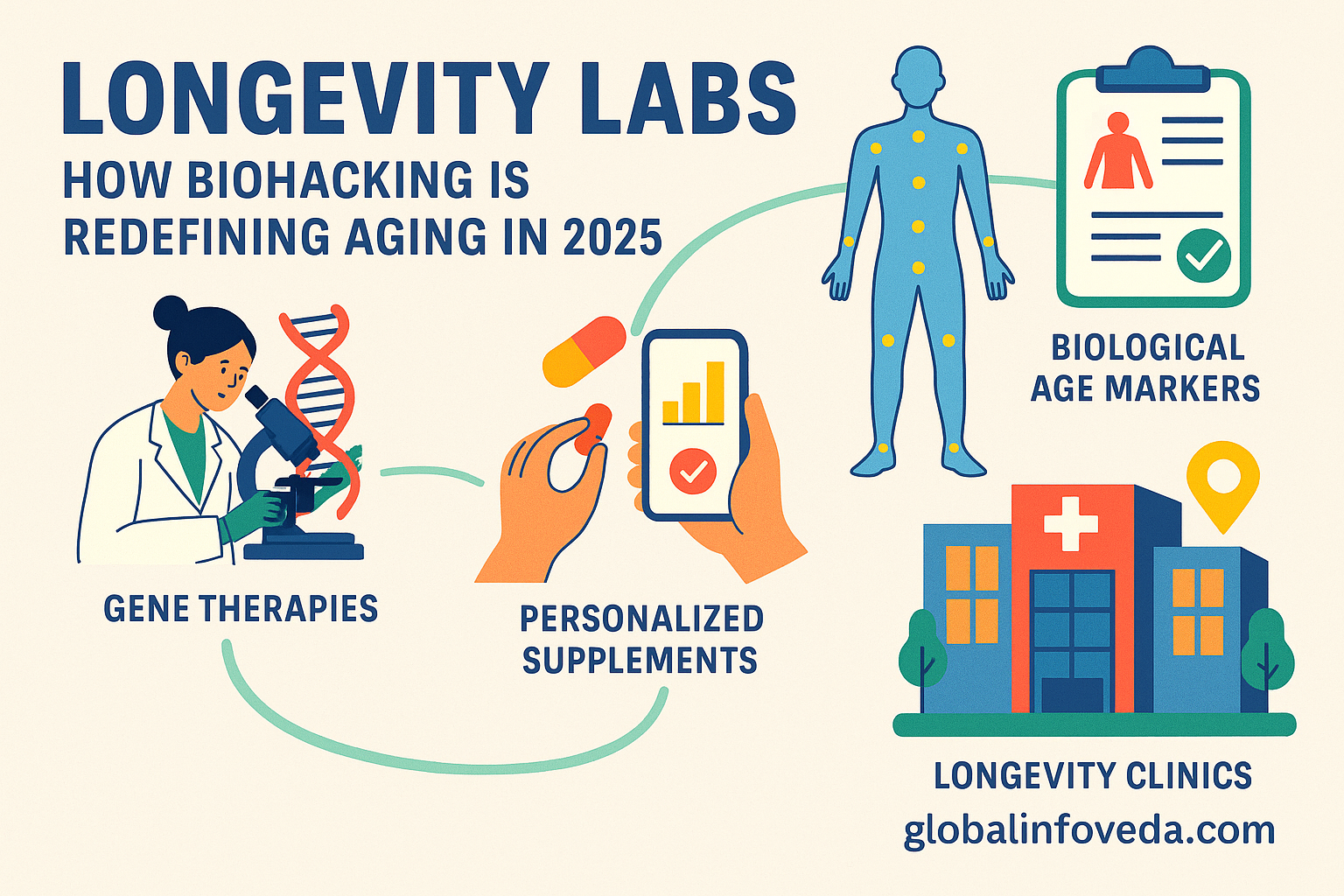
Life‑extension clinics meet DIY biohacking in 2025, when the former-niche experiments are now mainstream healthy ageing tactics. Content: From home glucose monitors and HRV dashboards to clinic-grade DEXA scans, VO₂ max testing, and targeted supplement stacks, millions of active agers now shape their week ahead like athletes-exception here being the promise of longevity instead of performance. The pitch is a simple one: measure what matters, fine-tune nutrition, train smarter, sleep deeper and stave off the diseases years before symptoms appear. The reality is more nuanced. Authentic longevity requires evidence‑led guardrails, compliance with medical ethics, and habits that will be meaningful for a salaried parent in Bengaluru as well as a startup founder in San Francisco. This guide breaks down the science signals, the cultural swerves in India, the safest playbooks and the pitfalls to avoid — so biohacking becomes a tool for the well-being of communities, not just a vanity project.
Meta description: The 2025 field guide to longevity labs and biohacking—evidence, routines, India‑specific tips, risks, costs, and smart tools that extend healthspan without hype.
🧭 What counts as biohacking in 2025
- 🔬 Metabolic tuning: using continuous glucose monitors, meal sequencing, and strength training to stabilise insulin and improve metabolic health.
- 💤 Circadian alignment: protecting morning daylight, consistent sleep, and evening blue‑light hygiene to raise melatonin and deep sleep time.
- 🏋️ Strength + VO₂ mix: progressive overload on big lifts, sprint intervals or zone‑2 to raise VO₂ max, bone density, and muscle mass.
- 🥗 Protein timing: distributing protein across meals with leucine‑rich sources; rotating plant diversity to feed the microbiome.
- 🧴 Skin and sun: daily broad‑spectrum sunscreen, retinoids if indicated, and realistic expectations for photoprotection.
- 🧠 Cognitive hygiene: learning goals, social novelty, and mindfulness to maintain neuroplasticity and reduce anxiety.
- 🧪 Targeted labs: periodic lipid panels, HbA1c, thyroid checks, kidney and liver function to catch drift early.
🧠 Why the movement exploded now
Two forces collided. First, the revolution in measurement: consumer sensors got smaller and cheaper, and the apps less gimmicky – HRV, sleep scores are closer to something a clinician might hang their hat on if used consistently. The care gap widened, secondly: busy clinics can’t find the time to prevent as chronic conditions spike younger. Biohacking is marketed as a bridge — self‑service insights through the year between annual checkups. But the most successful results occur when employees and employers treat the tools as supplements to primary care, not substitutes. In Indian cities, with UPI payments and affordable yoga-friendly co‑working gyms, with rich vegetarian offerings of every description, it’s easier, if you stay away from trendy supplements and focus on routine.
🧮 Choosing a north star metric
| Focus | Why it matters | How to track |
|---|---|---|
| VO₂ max | Cardiovascular capacity correlates with lower all‑cause mortality and resilient cardio‑metabolic health | Field tests or wearables with repeatable routes |
| Waist‑to‑height | Simple proxy for visceral fat and insulin resistance | Tape measure; target <0.5 for most adults |
| Sleep efficiency | Restorative nights power hormones, immunity, and mood | Time in bed vs. time asleep; morning sanity check |
🌱 India‑specific context
Longevity in India is affected by dietary diversity, multigenerational homes, climate and commutes. And rotis, rice and street snacks fuel culture but can spike glucose without buffers of protein and fiber; and air quality and summer heat strains recovery. Solutions need to be culturally fluent: dal‑based protein, fermented staples like idli/dosa, seasonal millets, and pocket‑friendly strength training. Seniors may share homes with family, which can offer social support and provide the opportunity for walking groups, home‑cooked meals for lunch and terrace light exposure at night. The most leverage isn’t exotic tech; it’s respectful nudges that fit within real schedules and budgets.
10 Superfoods That Naturally Boost Immunity & Energy
🧰 Starter kit for a safe first month
- 🧭 Pick one lever: choose sleep or steps or protein—not all at once. Momentum > perfection.
- 📝 Baseline: log resting heart rate, morning energy, and waist size; take photos of typical meals.
- 🌞 Light: 10–20 minutes of morning sunlight; dim lights 90 minutes before bed.
- 🥛 Protein per meal: aim for consistent servings with dal, paneer, eggs, soy, or fish as per preference.
- 🚶 Movement floor: 6–8k daily steps plus two resistance sessions/week with progressive loads.
- 📵 Focus zones: phones parked during first and last 30 minutes of the day.
- 💧 Hydration: check urine color; add pinch of salt/lemon in extreme heat.
Sleep Science Breakthroughs: Hacking Insomnia with Tech & Therapy
🧪 Case study — Mumbai designer with erratic hours
A 31‑year‑old UI designer fought late‑night munchies, six‑hour sleep and weekend sugar binges. A concernedly pared-back routine placed a premium on a 10:45pm wind down, a protein heavy breakfast, and three-day strength rotation (push/pull/legs) at the local gym. She tried a CGM for two weeks to study meal sequencing — when salad and paneer were added before rice, the spike was reduced by 50 percent. At 12 weeks, waist‑to‑height dropped to 0.50, resting HR decreased by 6 bpm, and afternoon crashes disappeared. The “secret” was not exotic peptides; it was sleep, protein, and progressive overload.
🧪 Case study — Chennai retiree rebuilding strength
A 67‑year‑old grandfather with borderline HbA1c and knee aches started the following every day post-breakfast:Maintenance work, plus chair squats, grip work, and zone‑2 walks. He started meeting a group in the park for sun and social time, screaming at them while distanced, he moved dinner earlier by 45 minutes, and began serving himself, halfway through, some curd rice with lentils, to firewall off nighttime hunger. At three months, fasting glucose fell slightly, balance improved, and back pain lessened. He passed on expensive stacks and stuck to physio‑approved movements and a regular sleep routine. The lab marker he cherished most was mood — and more patience for his grandkids and confidence taking the stairs.
🧂 Nutrition — the durable moves
- 🥣 Meal order: veggies → protein → carbs blunts spikes without dogma; street‑side? add peanuts or curd.
- 🌾 Smart carbs: choose millets or parboiled rice on heavy workdays; cool rice for resistant starch.
- 🧫 Ferments: idli/dosa batters, curd, and pickles feed the microbiome; watch excess salt.
- 🫛 Protein rotation: dal, rajma, chana, paneer, fish, eggs, soy; pair with vitamin C for iron uptake.
- 🫒 Fats: ghee in small amounts, groundnut or mustard oil, nuts; avoid constant deep‑fry.
- 🥤 Sweet sanity: reserve sweets for festivals or post‑meal; sip black coffee or tea plain.
Adaptogens in 2025: Ashwagandha, Ginseng, and the Future of Stress Relief
💤 Sleep — the keystone
Sleep activates almost every pathway of longevity: hormones, immune repair, appetite regulation. Cooling beats gadgets In hot Indian nights In hot Indian nights, cooling beats gadgets—cross‑breezes, ceiling fans, or AC with 26–27°C set points. Banish devices from bed space, prioritize warm over cool lamps after sunset and take caffeine curfew seriously. Focus only on changes you’ll make: if sleep decreases, adjust having dinner earlier, throw in a short evening walk and try to move resistance training out of late night hours. And it’s not about perfect scores — it’s about stable mornings with steady energy and better mood.
🏃 Movement — strength now, speed later
Longevity is more responsive to losing muscle and power than to shaving a minute off 5K pace. Novices should work up to mastering squat, push, pull, hip hinge, and loaded carries with incremental load increases. (9) Once recovery is robust (see above), add two short rounds of HIIT or sprints each week over the top of a base of zone‑2 walking or cycling. For anyone still at the desk, micro‑sets (air squats, wall push‑ups) every hour to keep the body from getting stiff. Mall corridors or a hallway in an apartment building in cities are good for tracking cardio; in villages, fields early on a sunny day have the perfect light-movement pairing. The long game short: muscle keeps you free.
🧩 Training add‑ons that compound gains
- ⚡ Zone‑2 foundation → 150–240 minutes weekly at conversational pace; pairs best with days you don’t lift so recovery stays intact.
- 🧱 Creatine (3–5 g/day) → modest strength and cognitive support for many adults; load is optional; hydration and clinician input if you have kidney concerns.
- ⏳ Time windows → finishing dinner 2–3 hours before bed improves sleep quality for many; not for pregnancy, kids, or when shift schedules demand late meals.
- 🧘 Breath work → 6 breaths/min for five minutes nudges vagal tone; use before exams or meetings.
- 🌡️ Thermal stress → moderate sauna or cool showers may aid mood and soreness; ramp gently and avoid extremes if you have heart or BP issues.
🧰 Biomarkers — what to test, and how often
- 🩸 Quarterly basics: lipids (ApoB if possible), HbA1c, CMP (liver/kidney), TSH; add vitamin D if symptoms or low sunlight.
- ⚖️ Anthropometrics: waist‑to‑height, bodyweight trend, and if available DEXA yearly.
- 🫀 Function: simple 1‑minute sit‑to‑stand, grip strength, and a timed 1 km walk.
- 🧠 Cognition: memory games and learning a new skill every quarter.
- 🦴 Women’s health: peri‑ and post‑menopause require attention to bone density, protein, and resistance work; consider DEXA scheduling.
🧪 Table — Testing tiers
| Tier | What’s inside | Who it suits |
|---|---|---|
| Home | BP cuff, step counter, tape, kitchen scale | Budget‑minded, first 90 days |
| Community | Basic labs, EKG, supervised strength form checks | Returners, seniors, safety focus |
| Clinic | DEXA, VO₂ max, advanced lipids, sleep study | Athletes, complex cases, data lovers |
🔒 Safety, ethics, and supplement reality
Biohacking becomes risky when marketing overtakes evidence. Here’s a sober rule: lifestyle moves provide most of longevity; pills are secondary, not central. Be suspicious of megadoses, cocktail stacks or unverified import powders. Follow only what leads a change; chasing every biomarker is an invitation to anxiety. Respect medical ethics: no self‑prescribing hormones; no off‑label fiddling without medical oversight. If a change is causing sleep to get worse, mood to get darker or the social circle to shrink, don’t just change it back: Reverse it. And don’t forget: community — including friends, family, clubs — protects healthspan more effectively than any pill.
🧭 India’s policy and care landscape
- 🏥 Primary care first: use family physicians to interpret labs and coordinate referrals; they understand your context.
- 🧪 Diagnostics: NABL‑accredited labs improve reliability; avoid bargain pop‑ups for complex tests.
- 🧴 Supplements: FSSAI regulates claims; caution with imported products lacking clear labels.
- 🧑⚕️ NPHCE: the National Programme for Health Care of the Elderly expands services; learn local clinic hours.
- 🧹 Air quality: AQI awareness, N95 on burn days, and indoor plants for comfort (not a substitute for ventilation).
Digital Detox 2025: Can Cutting Screen Time Restore Your Brain Health?
🧭 Build a 12‑week longevity sprint
Sleep and protein (weeks 1–4) It’s funny because they all seem to matter in the same order of magnitude. Factor in morning light, a regular wind‑down and two resistance days featuring full‑body patterns. Weeks 5–8 – add zone-2 on non-lift days, move dinner 60 minutes earlier, include one social visit out of doors one time per week. Weeks 9–12 test cautiously: a brief HIIT segment, a weekend hike, a new skills class. Re‑run labs at week 12 if you are actually going to act on it — otherwise keep those habits and recheck at six months. The sprint concludes with a written score card: energy, sleep consistency, steps, lifts forward and friendships nourished. And that last line matters a lot more than a decimal on a biomarker.
🧰 Kitchens, offices, and neighbourhoods — design for adherence
- 🧊 Batch cook: dal base on Sundays; freeze portions; add greens nightly.
- ☕ Caffeine rules: 1–2 cups pre‑noon; switch to herbal later; hydrate alongside.
- 🗂️ Desk setup: eye‑level screen, lumbar support, and a timer for 50/10 work blocks.
- 🌳 Green routes: identify a safe 1 km loop with shade; walk calls in that loop.
- 🧑🤝🧑 Accountability: buddy check‑ins twice a week; celebrate streaks, not perfection.
🧱 Myths that waste time
- ❌ “Supplements beat sleep.” Most longevity gains come from sleep and strength, not bottles.
- ❌ “Cardio alone is enough.” Without resistance training, bone and muscle decline.
- ❌ “I’m too old to start.” Strength adapts well into the 70s and beyond with supervision.
- ❌ “Office work blocks progress.” Micro‑sets and walking loops offset long sits.
🧭 Mind, community, and meaning
Purpose protects healthspan. Volunteering and mentoring, faith practices, clubs — all of these can buffer stress and broaden social networks. At joint families, shared meals, and evening strolls give rhythm and reduce loneliness. For the singles of dense metropolises, crowding around the village square is more likely to involve an introduction to Lucian Freud’s nudes or the sounds of Bangladeshi metal, than pig trading. Technology does its part — group chats, step challenges — but the heartbeat belongs to the human. A longevity lab is a kitchen table, a park bench, a group of people walking somewhere, and a calendar that looks like your life and what you value.
🧪 Table — Budget tiers for a year
| Tier | Monthly spend | Notes |
|---|---|---|
| Lean | ₹1,500–₹3,000 | Home cooking, bodyweight, free parks, basic labs twice/year |
| Balanced | ₹5,000–₹10,000 | Gym membership, quarterly labs, one course/class |
| Data‑rich | ₹15,000–₹40,000 | DEXA, VO₂ testing, coaching, travel for clean air weeks |
❓ FAQs
- Do I need a CGM to start biohacking? No. Walking after meals, protein distribution, and sleep discipline deliver large benefits without sensors.
- Which supplement matters most? If diet is varied, perhaps creatine for strength and cognitive support; discuss vitamin D if sun exposure is low.
- How much protein is safe for elders? Often more than expected when kidneys are healthy—spread evenly and combine with resistance training.
- Is intermittent fasting mandatory? No; it’s one tool. Prioritise quality food and sleep consistency first.
- What should women focus on at menopause? Protein, resistance work, vitamin D/calcium, and talk to a clinician about symptoms.
🧬 Cellular levers you can influence
Long‑term resilience is at the intersection of mitochondrial function, glycemic control, and inflammation. But while buzzwords like mTOR, AMPK, and sirtuins can sound like vague concepts, the practical levers are straightforward and repeatable in India: leg- and back-load lifting that provokes muscle protein synthesis; regular zone‑2 efforts that go to work on mitochondria proliferation; fiber‑rich meals that buffer glucose swings; consistent sleep that brings hormones back. Intervals of low‑intensity fasting or more space between dinner and sleep may support insulin sensitivity in some adults but play second fiddle to the basics — early dinners, protein distribution, and steady movement. If a protocol leaves you grumpy, socially isolated or wired at night then it fails the healthspan test despite improving markers of health.
🧊 Heat and cold — when, how, and for whom
- 🔥 Sauna or steam 1–3×/week after lifting can aid relaxation; begin with short sessions and sip water with electrolytes in hot months.
- ❄️ Cool exposure (brief showers or tub) is better after easy days than after heavy lifting, where it may blunt muscle adaptation.
- 🫀 Contraindications: unstable BP, dizziness, or recent cardiac events—skip and ask a clinician.
- 📈 Signal to watch: morning resting HR and mood; if both worsen, reduce frequency.
🫁 Breath and stress — faster wins than another pill
But stress biology erodes longevity long before a lab value changes. The simple drills trump the complicated stacks: five minutes of slow nasal breathing before bed; box breathing in between meetings; and a 10‑ minute early evening walk under warm light, converting mental rumination into movement. When you are too anxious to scroll at night, swap social media for pen‑and‑paper “tomorrow lists” used to offload working memory. Combine this with social contact — a quick voice note to a friend or a parent. If sleep is still stalling, look at caffeine timing and room temperature before reaching for supplements.
👩 Women’s health across decades
Ages 20s to 60s The themes remain the same — protein, strength, sleep — but the spotlight moves. 20s and 30s: Build a muscle and bone base with two to three full‑body sessions and enough iron‑rich foods (dal + greens + lemon). Pregnancy and postpartum are the time to focus on pelvic floor resilience, progressive loading, and macronutrient timing rather than heroic caloric deprivation. Via peri‑ through post‑menopause, protein targets often have to increase, and resistance work is non‑negotiable for bone and metabolic health. In order to feel okay on hot nights, it’ll be down to cooling dinners, earlier dinners, evening walks. Medical talk for how to manage our symptoms belongs with a doctor; biohacking here means nailing the repeatables and wearing wearables for accountability, not anxiety.
👴 Seniors playbook that respects joints
- 🦵 Sit‑to‑stand ladders (from chairs of different heights) for leg strength.
- 🖐️ Grip work with putty or light farmer’s carries to secure independence.
- 🚶 Post‑meal walks 10–15 minutes to flatten glucose spikes.
- 🌞 Morning light on the balcony or terrace for sleep timing and mood.
- 🛏️ Early dinners and calm pre‑bed routines to reduce night‑time reflux and awakenings.
💼 Desk‑worker blueprint
Contemporary desk jobs beget the antithesis of longevity — long sits, dim indoor light, erratic eating. Meeting-friendly fixes: 50/10 work blocks with mini-sets (10 air squats or wall push‑ups), water within arm’s reach and headset walks for at least one or two calls daily. Prep your protein — curd + chana, eggs or tofu wraps — to avoid 4 pm crashes. The book/”lifts” as a meeting with yourself in your calendar and claiming that you’ll guard two week nights as device‑light. Snip the volume when stress hits but maintain the schedule — by small victories keep your identity as a person who trains.
🏘️ Urban vs rural India — different paths, same goal
- 🏙️ Cities: AQI swings and summer heat demand indoor routes (malls, corridors) and evening terrace time for light.
- 🏡 Towns/villages: fields and quiet lanes are perfect for sunrise walks; add bodyweight strength with bags of grain or water containers.
- 🚌 Commuters: get off one stop early, take stairs, and use station benches for step‑ups.
- 🧑🤝🧑 Community: walking WhatsApp groups keep safety and consistency high.
💰 Cost–benefit reality check
The highest return on investment is kind of boring: sleep, protein, strength. A ₹600/month gym and just a pressure cooker trumps a ₹6,000 supplement stack every day. DEXA or VO₂ tests can be useful once or twice a year if they modify training, not as trophies. Buy time, if budget allows: pre‑cut veg, a coach who realigns form in three sessions, a fan to cool hot nights. Track the money saved not buying more take‑outs, and the money saved on energy; that’s what sticks better than chasing a perfect score in an app.
🧯 Safety and ethics — plain rules
- 🧪 No self‑prescribing hormones or research chemicals.
- 🧬 Genetic tests should be interpreted with clinicians; don’t let probabilistic risks drive fear.
- 💳 Transparent pricing for labs and subscriptions; cancel easily.
- 🔐 Privacy first: turn off model‑training on personal logs if offered; export and delete periodically.
🗓️ A simple seven‑day template
Mon: full‑body strength (push/pull/legs) + 10 min nasal breathing at night. Tue: 40 min zone‑2 walk; post‑meal loop after dinner. Wed: mobility + light carries; lights low after sunset. Thu: full‑body strength + 10–20 min terrace walk at dusk. Fri: 30–45 min zone‑2; call a friend while walking. Sat: skills day—yoga, dance, or sport; earlier dinner. Sun: batch cook dal base, plan week, long easy walk with family. Keep caffeine pre‑noon, finish dinner early, and treat sleep like a standing appointment.
🧪 Real‑world mini diaries
- 📓 Teacher, Jaipur: replaced late chai biscuits with curd + chana, added balcony light and two 20‑minute walks. Afternoon headaches vanished in three weeks.
- 📓 Software lead, Hyderabad: reduced midnight coding, moved lifts to lunch hour, and wore blue‑blocking glasses after 8 pm. Morning energy recovered; weekend cricket returned.
- 📓 Home‑maker, Coimbatore: added farmer’s carries with shopping bags and morning sun on the terrace. Knee aches eased; mood brightened.
🧘 Mindset that survives festivals and deadlines
Perfection collapses under real life. Adopt minimums: two strength days, two long walks, and a sleep wind‑down you can execute in a guest room or on a train. During festivals, focus on order and protein before sweets, and add extra steps. During crunch weeks, protect mornings and make lifts shorter but heavier. The goal is continuity, not heroics.
🧪 Progress checks that matter
- 📉 Resting HR trend down or stable.
- 🧍 Waist‑to‑height approaching <0.5 for many adults.
- 💤 Sleep regularity most nights.
- 🧑🤝🧑 Social touch points logged weekly.
- 🧗 Performance: a few more kilos on the bar or one extra flight without breathlessness.
🔗 Related reads
📚 Sources
- WHO — Global strategy and action plan on ageing and health: guidance on healthy ageing and community‑level supports. https://www.who.int/ageing/healthy-ageing
- Ministry of Health & Family Welfare, Govt. of India — NPHCE: National Programme for Health Care of the Elderly. https://main.mohfw.gov.in/Organisation/Departments-of-Health-and-Family-Welfare/elderly-health
- ICMR‑NIN — Dietary Guidelines for Indians (2023): nutrition principles relevant to protein, millets, and balanced plates. https://www.nin.res.in/dietaryguidelines.html
🧠 Final insights
Real longevity is not a laundry list of things you have to do. It’s about a rhythm and schedule. When sleep, protein, strength, light, social ties lock into an easy weekly beat, biomarkers follow. Gadgets can assist, but your biggest multipliers are low‑cost: early dinners, brisk walks with friends, micro‑sets, regular bedtimes — and quarterly check‑ins to make tweaks. In India, the strengths — family networks, vegetarian variety, morning markets, and walkable temple streets — are already longevity labs. Anchor to that, layer tech only where it solves a true friction, and pick changes you can maintain through festivals, summers and deadlines. That’s how biohacking becomes a human practice, adding not just years lived, but joy and freedom within them.
👉 Explore more insights at GlobalInfoVeda.com