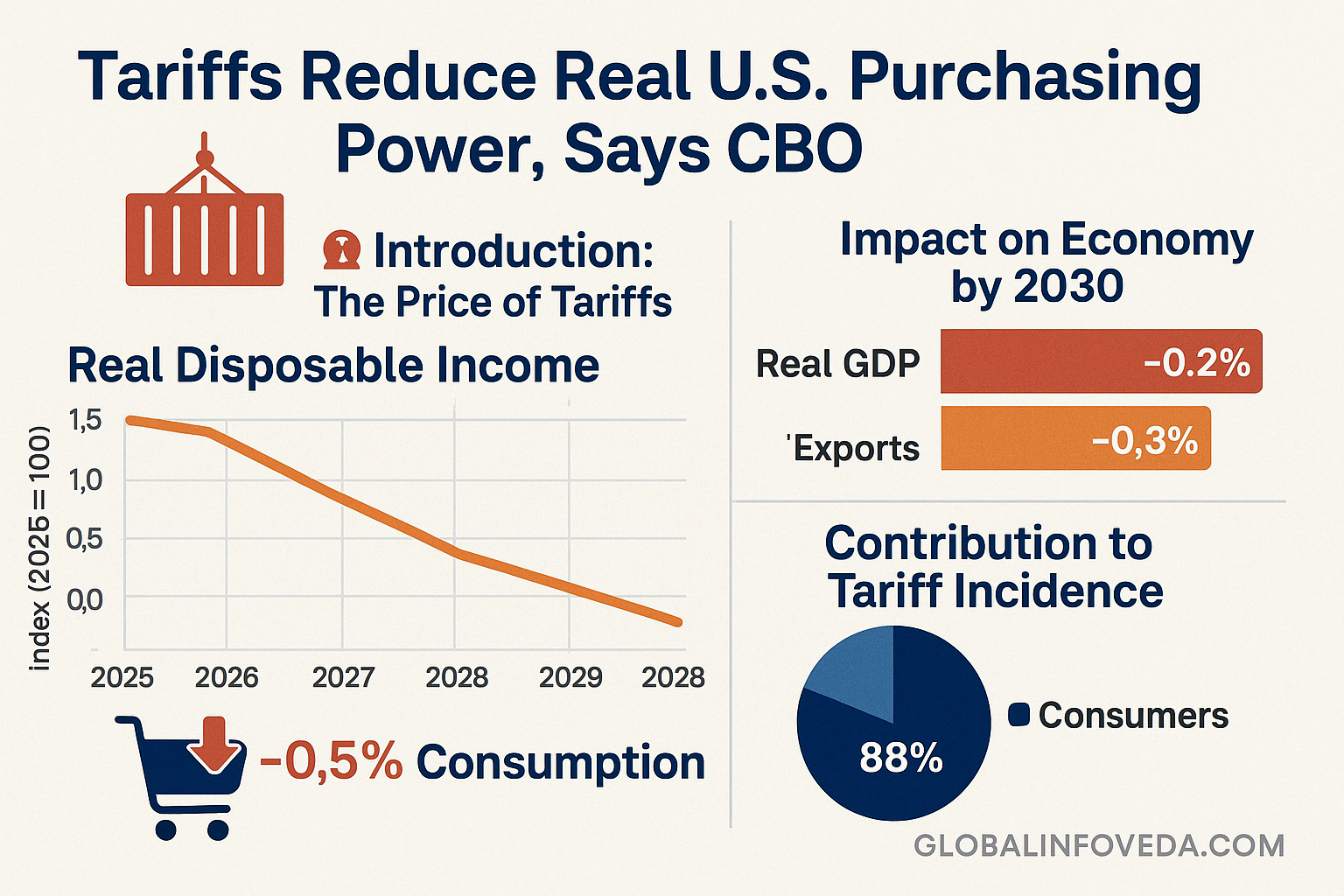





📈 Introduction
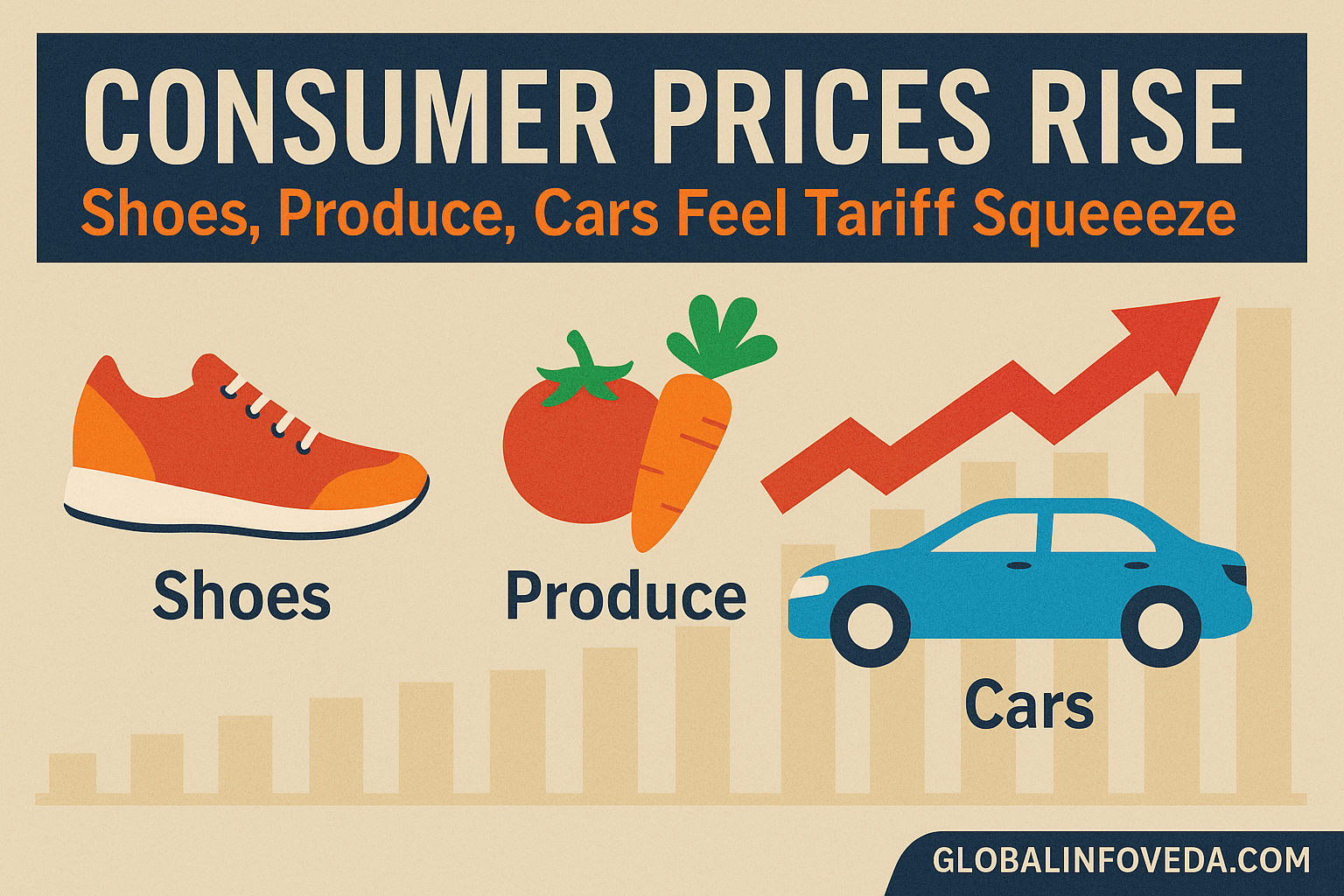
Consumer Goods Price Rise: By mid-2025, shoppers at metro malls, kirana aisles and dealership floors observed this pattern emerging as the new normal: consumer prices continued to inch up when headline inflation seemed to cool down. There were three categories that best illustrated the story — shoes, produce, and cars. Each occupies a different rung of the global supply chain, yet all found themselves pinched by surging tariffs, freight volatility and currency jitters. The everyday effect? A more expensive school shoe, a more expensive salad bowl and an on‑the‑road car price that edged over the budget. This deep dive unpacks the way tariffs trickled down to shelf tags, why the speed of the pass‑through varied by category, how retailers and brands responded, and how individual households can do what they can to protect spending power without adopting a throwing‑down‑your‑shield‑before‑a‑siege sort of posture. It also looks at what policy makers can do, reasonably, in the near term as companies re-establish their sourcing and cycle times for inventory.
Meta description: In 2025, tariffs lifted consumer prices—especially shoes, produce, and cars. See causes, pass‑through math, and smart moves for households.
🧭 Where the 2025 price pressure came from
The latest wave of tariffs landed on top of three existing frictions: tight labor markets in logistics, elevated insurance premia for key shipping lanes and lenders re‑pricing risk. For shoes, the pinch was felt from duties on uppers, rubber and finished footwear, entering into major ports, along with more rigorous compliance checks. For produce, there were cold‑chain electricity rates, last‑mile diesel and packaging inputs (films, trays) with import polymers, tariffs amplified the costs further. The pressure was layered on cars: imported parts like engines, infotainment systems, sensors and batteries, which meant longer lead times; and costs for dealer financing. The combination made sure the smallest duty changes became price upticks in people’s carts and car quotes.
Explore income‑tier stress: Tariff Pain Unequally Spreads: Lower vs Higher Income Household
⚙️ How tariffs turn into prices at the checkout
- 🧾 Landed cost uplift: Import tariffs apply to the CIF value (cost + insurance + freight). A 10% duty on a ₹10,000 consignment adds ₹1,000 before warehousing and margins.
- 🧊 Inventory repricing: Retailers with thin stocks adjust tags within weeks; those with long cover (large chains) delay increases but then move in step across outlets.
- 🛠️ Component echo: Duties on specialized inputs—rubber, adhesive chemicals, chips—raise costs of finished shoes and cars even when final items are assembled domestically.
- 🧯 Risk buffers: Volatile freight and currency swings prompt a safety margin baked into SRPs (suggested retail prices), especially on seasonal produce.
- 💳 Financing layer: When SRPs rise, more purchases move to EMI or credit; interest expense becomes a hidden surcharge, particularly for low‑score households.
👟 Category deep‑dive: shoes
School shoes, running shoes and leather formals just don’t map to global supply chains in the same way. Bottom shelf shoes, for example, have to work with imported rubber compound and adhesive resin because the local rubber line does not make their specification; mid‑tier trainers use synthetic uppers, foams and TPU, while premium leather lines get access to duty‑exposed hides and fittings. Since fit and durability curtail substitution, buyers run after brands they know or shop brands they trust, so demand is only partially elastic. That doesn’t mean there are no discounting cycles, but size assortments sell out early in season, so that late shoppers — who tend to be wage‑earners juggling shifts — pay more. Repair culture mitigates some hurt, but (re‑)imported soles as well as insoles have re‑priced. A durable school shoe at an entry price outpaced fashion sneakers, and warranties emerged as a tipping point for value‑conscious families considering the total cost of wear.
🥬 Category deep‑dive: produce
Fresh fruits and vegetables experience tariffs very differently than do durable goods. Even modest duties on selected imports (apples, berries, garlic, pulses) ripple back through cold‑chain operations. Electricity tariffs for refrigeration, reefer container rates and post-harvest losses are additional levels of cost that increase with the length of transit times. Retailers had three options: reduce pack sizes, mix imports with local substitutes, or promote private labels in the frozen and canned alternatives. Urban households huddled around weekly baskets delivered by quick‑commerce players, but the cost of delivery and surge pricing around festivals dulled those savings. Nutrition trade‑offs emerged as families prioritized stomach‑filling carbs over nutrient‑rich produce. The cleverest counter was via the menu design — anchoring nexus meals with seasonal local greens, and using frozen imports sparingly for a bit of variety.
🚗 Category deep‑dive: cars
In the case of cars, the price ladder was elevated by three rungs: import content, dealer-stocked inventory financing and insurance. And even when final assembly is domestic, crucial modules — safety sensors, infotainment chips, catalytic systems and battery cells — have import exposure. Tariffs and certification expenses on these inputs inflated the ex- factory price. Dealers subsequently paid higher working‑capital charges, which expanded the on‑road quote. Customers reacted by downtrading, which means they opted for a cheaper segment, they took fewer options, and stretched EMIs.” Pre‑owned volumes went through the roof where the warranty programs were believed. In the meantime, service bays rang up common wear items with imported content (brake kits, ECU’s) so TCO (total cost of ownership) was the real war. Brands that localized high‑turn components early in the race won loyalty even when sticker prices rose.
📊 🧮 Category pressure matrix
| 🧩 Category | 🔗 Import exposure share (indicative) | ⏱️ Pass‑through speed |
|---|---|---|
| Shoes | Medium‑high (rubber, synthetics, fittings) | 4–10 weeks |
| Produce | Low‑medium (select items + packaging) | 2–6 weeks |
| Cars | High (electronics, safety, battery) | 6–16 weeks |
Market shock timeline: “Liberation Day” Tariffs Spark Stock Market Crash of 2025
👥 Who bears the brunt
- 🧒 Lower‑income families: Higher share of wallet for food and school items; fewer chances to time purchases; higher credit costs amplify tariff pass‑through.
- 🧑🎓 Students and early‑career renters: Device‑dependent, commute‑heavy; small basket shopping limits bulk savings; second‑hand shoes and refurbished gadgets bridge gaps.
- 👨👩👧 Middle‑income households: Rely on financing for cars; trade‑down to base variants; switch to store‑brand staples and seasonal produce for balance.
- 👩💼 Affluent households: Feel it on premium imports and travel, but substitute more easily; hedge with portfolio rebalancing and loyalty programs.
🏪 Retail tactics shaping shelf tags
Big chains haggled over vendor rebates, and stretched stock cover to ease the transition; neighborhood stores pared assortment, and switched to store-drawer basics. Price boards more often quoted unit rates to encourage baskets to trade up, but shrink‑packs were still prevalent to hit price points. Shoewear narrow return windows to combat wear‑and‑return abuse. In the produce aisles, retailers pushed “seasonal swaps” signage (local greens for imported salad mixes), while urging the frozen berries for smoothies. Automobile dealers switched to overt TCO calculators, adding on service and extended warranty as a package to mitigate the EMI fear. The balance had shifted from pursuing the lowest sticker price to maximizing value over expected product life.
🔬 Supply‑chain mechanics most people overlook
- 🚢 Blank sailings: Canceled voyages compress capacity, lifting spot freight; per‑unit shipping costs rise on light items like shoes boxes.
- 🧊 Cold‑chain energy: Refrigeration runs long hours at high tariffs; every extra day adds cents to a kilo of imported produce.
- 🧪 Compliance bottlenecks: Randomized inspections delay clearance; detention and demurrage feed into distributor pricing.
- 🧰 Packaging dependencies: Food‑safe films and trays often rely on imported polymers; duties here cascade across many categories.
- 🔧 Aftermarket friction: For cars, delayed chips make service bay queues longer; customers accept pricier refurbished modules to avoid downtime.
🧪 Case study — a footwear MSME importing soles
A city‑fringe MSME making school shoes imported pre‑molded soles and EVA sheets. When tariffs rose on rubber compounds and ancillary chemicals, landed cost jumped 11–13%. The firm tried three fixes: (1) local rubber, which failed durability tests; (2) redesign uppers to extend life and justify a higher SRP; (3) switch to a slower fashion cycle to limit size‑break markdowns. The winning combo was SRP + warranty: a “90‑day school‑proof” guarantee and in‑store repairs. Returns fell, word‑of‑mouth rose, and unit economics recovered without eroding trust.
🧪 Case study — a cold‑chain grocer’s weekly basket
An urban chain found imported apples and berries turning into cost anchors. It introduced a “seasonal switch” basket: local guavas, papaya, and spinach paired with a small frozen import for variety. The store printed cooking cards for quick sautés and salads, nudging families to keep fiber and vitamin C high without blowing budgets. Waste halved in four weeks; margins held; customer satisfaction scores rose because the basket felt abundant even with fewer import luxuries.
🧪 Case study — a car dealer navigating option mixes
A multi‑brand dealer saw resistance at higher trims once tariffs lifted import‑content modules. The fix: market base variants with two safety upgrades and a value service plan. Sales teams used TCO sheets that showed five‑year costs including wear parts and fuel. Customers felt mastery over the decision, and cancellations fell. The dealer’s margins stabilized not because prices dropped, but because the proposal matched what families could actually carry through a cycle of fuel, service, and occasional bodywork.
🧰 Household playbook to protect purchasing power
- 📓 Keep a price notebook: Note unit rates on 30 staples; buy when below your own baseline.
- 🧊 Batch‑cook & freeze: Flat‑pack dals, beans, sauces; cut takeout drift on tired nights.
- 🛡️ Repair before replace: Glue kits, heel taps, insole swaps extend shoes life; car filters and fluids delay expensive failures.
- 🛒 Community bulk: Share oil, rice, diapers with neighbors; split delivery and storage.
- 🧮 EMI discipline: Match installment plans to the asset’s real life; never run a phone EMI longer than the warranty horizon.
Hands‑on coping strategies: Working Families Cut Costs—Skipping Meals, Choosing $5 Dinners
🧠 Financing and credit: the invisible surcharge
As sticker prices climb, more and more carts lean on credit. But APRs vary wildly. Households with strong credit histories land low‑cost EMI offers; others with thin files or past delays get double‑digit interest. The total outlay, purely from interest and fees, can climb around 15–30% over MRP on a mid‑range phone or an entry car. That makes the financial literacy which drives the behavioural response so vital an inflation hedge: opting for truly merchant subvention‑rolled no‑cost EMIs, avoiding rolling over balances, and pre‑closing loans when bonuses come in. Retailers are adding BNPL at checkout more and more, but not all the plans make true costs readily available. And to be clear, families should compare APR, tenor, and prepayment penalties, not just which payment feels most comfortable.
🧪 The pricing math (walk‑through)
Lets take an example of a running shoe having CIF value of around ₹2,000. Adding 10% tariff, in and compliance (₹60), inland freight (₹40), warehousing (₹30). What an 10% distributor margin does is raise it to ₹2,530. Retailer adds a margin of 20% to cover overheads and risk and sell for ₹3,036. If currency weakens by 3% and freight surges add ₹30, SRP is ₹3,166. Discount seasons are capable of erasing 5-8%, but shoppers outside size runs aren’t served deals as quickly. That’s why entry‑level sizes can sell for near‑full price even when the banners scream sale.
🧩 Brand and retailer strategies that actually work
- 🧬 Spec‑based assortments: Curate around performance metrics (sole life, breathability) instead of chasing fashion churn; helps justify SRP.
- 🧪 Material swaps: Localize midsoles and insoles first; preserve imported components where performance is non‑negotiable.
- 🔁 Cycle discipline: Fewer, stronger drops reduce markdown waste and stabilize cash flow.
- 🎯 Unit‑price signage: Educate shoppers on cost‑per‑use; school shoes framed this way outsell fashion peers under price stress.
- 🤝 Warranty as trust: Short, credible guarantees beat vague “premium” claims in a tight year.
🏛️ What policymakers can still do this year
- ⚖️ Tariff calibration: Differentiate between luxury imports and essential inputs; spare baby nutrition and public‑safety components.
- 📊 Price transparency: Mandate clear unit pricing and pack weight standards to curb shrinkflation confusion.
- 🚚 Logistics efficiency: Prioritize reefer lane turnarounds and port clearance windows to cut perishables’ carrying costs.
- 💳 Credit fairness: Encourage true no‑cost EMI disclosures; cap punitive fees on essential durable finance.
📊 🧾 Shoes: input duties vs expected shelf impact
| 🧱 Input or module | 🧮 Duty/constraint (indicative) | 🎯 Likely shelf impact |
|---|---|---|
| Rubber compounds | Mid‑teens duty + freight risk | +3–6% on budget school lines |
| Synthetic uppers | Mid duty + compliance checks | +2–4% on mid‑tier trainers |
| Leather fittings | Higher duty + quality rejects risk | +4–7% on premium formals |
📊 🚗 Cars: segment exposure and pass‑through
| 🚙 Segment | 🔗 Import content focus | ⏱️ Timeline to price move |
|---|---|---|
| Entry hatchback | Sensors, ECUs, catalytic bits | 6–10 weeks |
| Mid sedan/SUV | Infotainment, safety modules | 8–14 weeks |
| EV/hybrid | Battery cells, power electronics | 10–16 weeks |
❓ FAQs
- Are all price increases from tariffs? No—energy costs, freight, and financing also push up consumer prices, but tariffs set the baseline when import exposure is high.
- Why do some shops hold prices longer? Larger chains hedge inventory and contracts; small stores must reprice quickly to survive.
- Is buying local always cheaper? Not automatically. Local goods may still embed imported inputs; evaluate by spec and cost‑per‑use.
- Should I delay a car purchase? If your current vehicle is reliable, yes; otherwise, compare total cost of downtime vs higher EMI on a replacement.
📚 Sources
- U.S. Bureau of Labor Statistics (BLS) — CPI category trends and consumer expenditure shares: https://www.bls.gov/
- United States Department of Agriculture (USDA) — produce imports, perishables logistics, and food price outlook: https://www.ers.usda.gov/
- Bureau of Economic Analysis (BEA) — consumer spending and durable goods details: https://www.bea.gov/
- World Trade Organization (WTO) — tariff schedules and trade policy monitoring: https://www.wto.org/
🗺️ Regional price dispersion and channel effects
Price tags rarely rise uniformly. Dispersion by region increased in 2025 as inland freight, octroi‑equivalent levies and warehouse footprint varied across states. Coastal metros with direct access to the port corrected consumer prices more quickly for imported shoes and specialty produce, whereas smaller Tier‑2 and Tier‑3 towns experienced slower, sometimes steeper jumps when occasional bulk deliveries involved resupplying. Cars told the opposite story: city dealers with expensive real estate and higher working‑capital rates lead the move in on‑road prices but hinterland dealers led from the front when OEM tariffs on modules cleared through to ex‑factory pricing. Channel also mattered. Quick‑commerce forced through those inflected‑up prices on berries and salad mixes sooner than the hypermarkets did, because delivery‑fee math made every rupee of cold‑chain cost stand out more. Offline footwear stores pulled back on raises to drag footfall, but they shrank size ranges; e‑commerce marketplaces gave raises on SRPs but then padded them with coupon insanity that veiled true net prices. The families mastering this patchwork benefited from one simple wealth hack: They tracked the unit price of one product in two preferred channels per category and shopped where the spread of both product’s prices was consistently narrow.
🧮 D2C vs marketplace vs offline — who passes costs fastest
- 🧪 D2C brands: Accelerate changes within a fortnight because they see gross margin erosion in real time. They often swap materials mid‑run, publish sustainability notes to justify SRPs, and lean on limited‑drop scarcity to frame value.
- 🛒 Marketplaces: Spread higher tariffs via MRP revisions and variable seller fees; discounts mask increases, but net take‑home for buyers still creeps up 3–7% in sensitive months.
- 🏬 Offline chains: Delay price tags using older inventory cover; when they move, they switch to private labels for entry price points and reduce generous return policies on shoes.
- 🥬 Quick‑commerce grocers: Pass through on produce within days because delivery‑time refrigeration is expensive; they steer shoppers to frozen or local swaps using banner nudges.
🎒 School budgets, uniforms, and the hidden tax on time
When it comes down to household budgets, the sting is hardest felt by the families of school-goers. Uniform cycles concentrate around the start of terms, which crunch purchase windows into a few weekends. By 2025, the tariff pass‑through on rubber and adhesive inputs, combined with a smaller size range availability, forced parents into an early shopping (cash latched 3–4 weeks back) or a last‑minute scramble (now closer to MRP). Repair shops, once a stopgap, confronted their own cost lift, as imported heel plates and adhesive kits were re‑priced. One tactical shift that worked for a lot of guardians was a two‑pair strategy: one sturdy, warranty‑backed school shoe and one lighter, non‑school trainer, to prolong the life of the school pair for non‑school hours. Schools with vendor days coordinated with measured size inventories enabled families to avoid the long lines and panic premium — and turned a price squeeze into a manageable calendar decision rather than a thing that causes stress.
🥗 Nutrition trade‑offs: keeping micronutrients up under cost stress
In the produce aisles, berries, apples and garlic with higher import‑linked prices nudged families toward starchy fillers. That trade‑off — calories above micronutrients — has long‑tail costs in energy and immunity. Households that maintained food security without recourse to food overconsumption engaged in ‘menu-design’ rather than item‑by‑item negotiation. They based meals on inexpensive local greens (amaranth, spinach), vitamin‑C rich guava, and sprouted pulses for protein and saved imported fruits as decadent weekend treats in frozen form to minimize waste. Batch‑prepping, pickling excess local fruit and saving for the lean season, and cooking legume cycles in pressure cookers for fast legumes cycles, kept diversity with less energy use. The best news: Kids put up with this stuff when the flavors were labeled as “chef specials” and drizzled onto plates with repeatable color patterns, proving that there is no necessary trade-off between price resistance and taste and habit, at least not once again you start talking about “moderation.”
🚚 Logistics corridors: micro‑shocks that turn into macro price tags
One oddity of 2025 was how minor logistics disruptions turned into sustained increases in consumer prices. Blank sailings on two Asia–Gulfpersonnel ports, temporary port labor shortages and insurance surcharges on certain maritime lanes hiked per‑box costs disproportionately for light categories, such as boxed shoes, and clamshell‑packed produce. For cars, cycle times for chips loosened up but acute shortages in certain sensors continued to leave OEMs choosing between slowing assembly or mid‑year trim re‑designs. The lesson for planners: De‑risk by judiciously splitting inbound flows across ports, not just suppliers, and by pushing predictive maintenance in reefer fleets so that cold‑chain failures didn’t cascade into emergency air lifts—the most expensive fix in the playbook.
🪙 Currency, hedging, and why timing your big buys matters
Small currency changes also amplify or soothe tariff bite. As the domestic ratio weakened against the dollar, landed costs rose less than duty rates; as it gained momentarily, a few retailers stuffed relief into their pockets to reestablish margins who’d taken a bit of a beating earlier in the year. Households timing big tickets — cars, high‑end shoes for athletes, bulk pantry refills — did best by tracking three signals: exchange‑rate trendlines, festival promo calendars and dealer inventory chatter. Pre‑booking a car at the time of a shipment’s arrival (rather than before) nets a batch priced on an older, more favorable import bill; likewise, pre‑season footwear buys avoid late‑season size shortfalls that slaughter discounts. Hedging is not only for CFOs; it is a consumer habit when tariffs and currencies are both on the move.
🔋 EVs, hybrids, and the battery‑cell bottleneck
Electrified cars suffered a specific choke point: imported battery cells and power electronics. Tariffs on these modules landed on top of commodity swings in lithium and nickel, making SRPs volatile. Some OEMs responded by offering longer battery warranties and modular pack designs, so a failing sub‑module could be swapped without replacing the entire pack. Consumers evaluating EVs in 2025 found that total cost advantage remained compelling for high‑mileage drivers, but break‑evens stretched for city‑only usage. The key is transparency: insist on degradation curves, real‑world service costs, and roadside assistance terms. Where cities invested in reliable public chargers, the math favored EVs despite tariff headwinds; without that ecosystem, hybrids with localized components remained the rational middle path.
🧩 Second‑order effects: employment, service quality, and wait times
Growing consumer prices not only alter what people buy; they reconfigure how businesses staff and serve. Shoe stores cut weekday staff, increasing the lines to try on shoes during peak hours. Grocers jacked up air‑conditioning and refrigeration, reserving maintenance for off‑peak hours, though they sometimes had systems fail, which required flash markdowns and empty shelves the next morning. Auto dealers staggered test‑drive slots and gave time slots to high‑probability buyers as people who just wanted to look drove everyone mad, causing those potential buyers to delay even more. The feedback loop: lower conversion today creates lesser pipeline tomorrow which means firms push put more cash for promotions for the sake of maintaining footfall. Operators who posted good quality service SLAs and held appointment systems to account kept trust and, paradoxically, increased AOV because customers thought the process was worth the commitment.
🧠 Early‑warning dashboard for households
- 📈 Unit price tracker: Maintain a baseline for 30 recurring items; alert when a store beats your 90‑day average by 5%.
- ⏳ Reorder cadence: Tie pantry refills to calendar triggers (salary day + 2) rather than emotional buys.
- 🧾 Receipt audit: Scan for shrink‑packs and bundle math; calculate effective per‑kg or per‑ml.
- 🛠️ Maintenance calendar: Rotate shoe care, appliance filters, tire pressure—small upkeep delays big spends.
- 🚦 EMI health: Treat monthly debt service as a traffic light—green under 20% of take‑home, amber 20–30%, red over 30%.
🧱 MSME survival kit: staying investible in a tariff year
- 🧭 Spec your moat: Compete on fit, comfort, or service turnarounds—not on being the cheapest shoes shop in town.
- 🔁 Shorten cash cycles: Fewer, stronger buys; negotiate vendor terms with shared risk on dud styles.
- 🧪 Test local materials: Pilot pods in one store; monitor defect rates; scale only when returns stay below 2%.
- 🗺️ Multi‑port routing: Split inbound shipments; avoid single‑point failures.
- 📣 Warranty clarity: One photo, three bullets, zero fine print—trust converts faster than coupons.
🧾 Household archetypes: three budgets under stress
Consider three families. The “Chakra” household in Tier‑2 city There are two pairs of school shoes, a new commuter hatchback and the greens for the week. They switch to group bulk for staples, fix the old microwave instead of buying a replacement and select an entry model with bolt-on safety features to their car; their monthly outgo goes up 6% and they can afford it. The Rivera renters in a metro cook at home five nights, purchase frozen berries once a week and use cabs; they defer purchasing a car, buy a bicycle and use a unit‑price sheet to line up pantry buys; net impact: better nutrition, flat spend. The Mehtas, a dual‑income family, do not own a vehicle with an internal combustion engine; the tower’s chargers are sketchy and so they opt for a hybrid with a service plan; expenditures jump by 9% but fuel savings pare it down again over 18 months. The TCO calculus here is often the rule not austerity.
🔎 How to read a car quote in 2025 without surprises
In 2025, the sales sheets have more moving parts. Beyond ex‑showroom and tariff impacted component costs, the on‑road figure now also bakes in dealer handling, insurance (with to‑you pricier sensor coverage), and add‑on packs that appear optional but conceal parts availability risk. The clean way to ask: ask for a line‑item quote for a package of three (the “essential” bundle of registration and basic insurance, the “recommended” one that includes many of the bells and whistles and the warranty, and the “elective” package of special rims and pretty decals). Two model comparison over five‑year period for TCO with Brake Kits, Tires and one accident repair. If a brand can’t produce a service parts price card that is transparent, walk away; ambiguity is more expensive than any penny saved on a slightly higher sticker.
🧪 Method notes: thinking about pass‑through
This model conceptualizes tariffs as a shock to CIF, which passes through landed costs, into wholesale and retail margins, and consumer expenditure. Pass‑through is not an instantaneous or linear process; it varies with the stock of inventory, the relative bargaining power and the price elasticity of each category. Highly commoditized items (school shoes in prescribed colors) and perishables (produce) move along more quickly than discretionary fashion footwear or discretionary automobile trims. This is the effect of financing being an amplifier, i.e., when more purchases can be pushed to EMI, so apparent affordability masks a greater lifetime spend. To see these levers as a set — import content, energy and freight, inventory policy and credit — is to have the only crystal ball necessary to call the next set of price tags that will move.
🌟 Final Insights
The 2025 pricing tale isn’t really about tariffs; it’s about how modern supply chains turn minor frictions into major receipts. Shoes feel it in the rubber and synthetic modules; produce in cold‑chain time and packaging; cars, in high‑tech components and dealer capital. The best performers: households and companies that treat the year as a systems challenge, not a series of surprises — tracking unit prices, cooking in batches, repairing (rather than discarding) before replacing, and applying warranties and TCO math to buy quality once. But policy can also nudge at the margins in terms of calibration, logistics speed and clean credit disclosures. But the power move actually belongs to consumers and operators who make predictable, repeatable choices.
👉 Explore more insights at GlobalInfoVeda.com