




🪷 Introduction
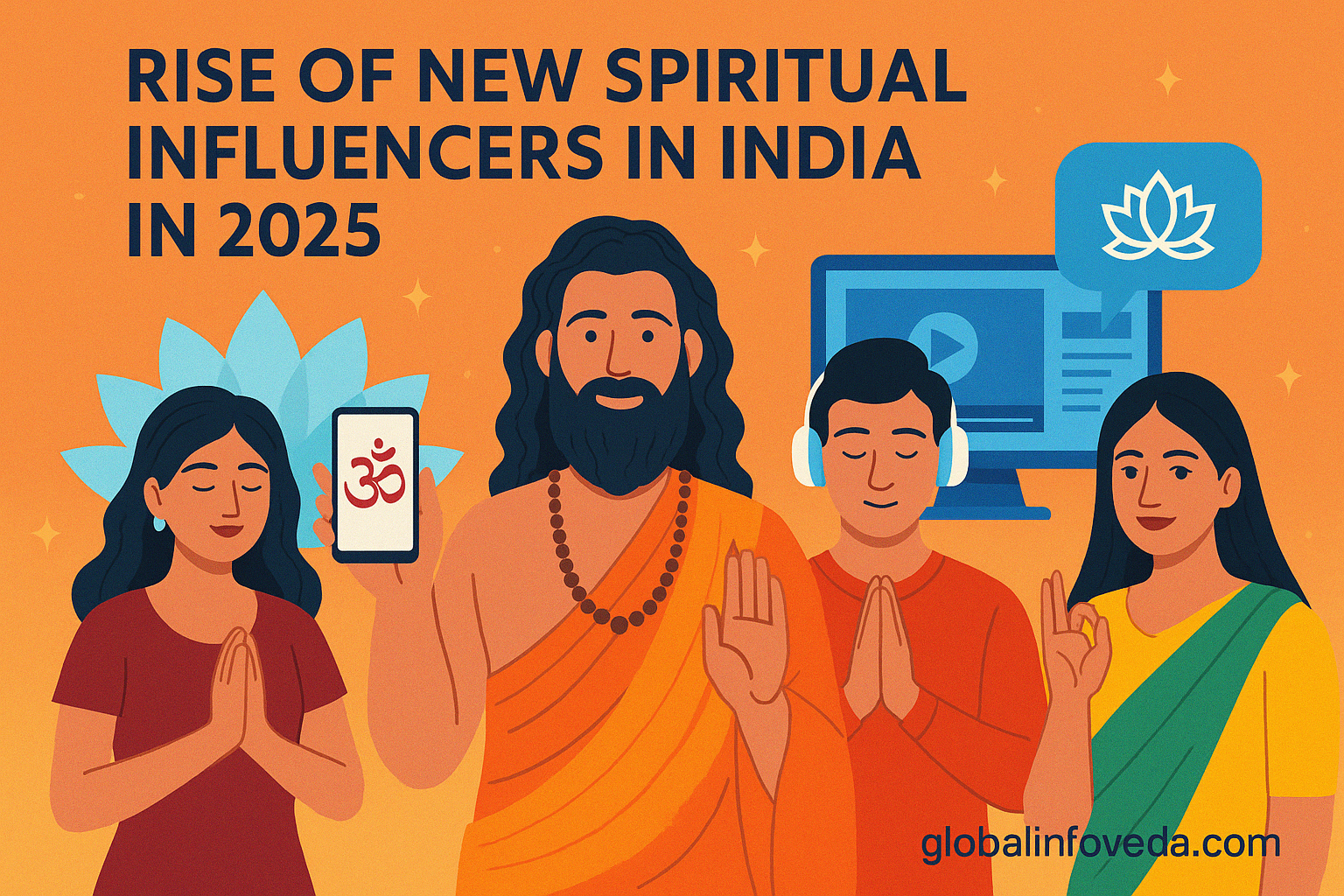
India’s new spiritual influencers 2025 are not just updated gurus or lifestyle bloggers with malas. They are a hybrid: part teacher, part therapist, part creator-economy entrepreneur who turns heritage into everyday practices for people grappling with exam stress, layoffs, loneliness and screen fatigue. Their feeds blend bhakti and breathwork, scriptural micro‑exegesis and astrology Q&As, mindful productivity — but also, increasingly, affiliate links, invites to retreats and brand partnerships. And the shift is significant because digital spirituality is now shaping mental health habits, the way we donate to charity, the ebb and flow of political discourse, even how we plan weekend leisure activities. It also raises tough questions about credibility, damage control and what passes as verifiable lineage in a culture where a viral short can outpace a lifetime of study. This guide highlights the landscape — who these voices are, how they rise, where money flows, the cultural stakes and how citizens can engage with both reverence and skepticism.
Meta description: India’s new spiritual influencers 2025 decoded—origin stories, platforms, business models, ethics, mental health links, policy, and tips to engage wisely.
🔭 What changed: from ashram loudspeakers to algorithmic satsang
A decade ago, spiritual talk slowly trended through temples, local satsangs, TV pravachans, and annual melas. By 2025, the home screen is a vertical video. YouTube Shorts’, which are not more than a few minutes long, and Instagram Reels, and ShareChat algorithms, feed in nightly mantras, two‑minute Gita takes, and guided meditations to the millions. This is no longer access; it is a refocusing of attention. Reels squeeze metaphysics into a hook‑fact‑takeaway arc, flattening the vegetable peel, as it were, of barriers of language while subtly shifting what “learning” feels like. And WhatsApp communities facilitate prayer lists, seva logistics and donation drives pushing piety as a socially actionable act. The result is an always‑on, algorithmic satsang that competes with gaming and K‑dramas for your late‑night slot. The upside is reach and inclusivity, especially for the young and the diaspora; the downside is speed — complex doctrines transformed into snackable wisdom that travels faster than nuance, and a cultural pressure to monetise that impels us to hot takes more than humility.
🧬 Typologies you’ll actually meet (creator taxonomy)
- 🎤 The Micro‑Expositor: breaks down Upanishads, Gita, Dhammapada in 90‑second clips; signature move is a sharp contrast between a verse and a modern dilemma.
- 🧘 The Breath‑Code Coach: leads pranayama, yoga nidra, and non‑sleep deep rest sessions; often cross‑trained in sports science.
- 🔮 The Astro‑Guide: decodes kundli, nakshatras, and planetary transits; sells personalised readings, runs live AMA nights.
- 🕯️ The Ritual Minimalist: curates simple daily puja setups and seasonal fasts; positions spirituality as “home ergonomics for the soul.”
- 🛕 The Heritage Interpreter: tours lesser‑known temples, folk traditions, and festivals; pairs history with etiquette and local cuisine.
- 💬 The Trauma‑Aware Monk: blends mindfulness, compassion practices, and modern psychology; focuses on burnout and grief.
- 📚 The Text‑Nerd: longform podcasts on Sanskrit sources, Pali Canon, and commentaries; offers reading groups on weekends.
- 🎥 The Docu‑Sevak: films seva projects—rations, medical camps, animal care; turns attention into volunteer hours.
📱 Platform dynamics and why some voices break out
Platform mechanics shape who rises. Short‑form engines benefit retention spikes and emotional arcs: awe, relief, gratitude, certainty. Creators who get the first three seconds dialed in — sound, subtitle punch, a surprising visual like a swirling mala close‑up — turn scrollers into listeners. Live rooms unleash gifts and instant Q&A credibility; community tabs create habit. Cross-posting in Indian languages is expanding reach outside metros; in both Hinglish-Tanglish and Bangla-English and Marathi-English, ideas travel without polarising either side of code-mix. The most durable channels are hybrids: shorts for discovery; long talks for depth; newsletters for intimacy; WhatsApp for action. The silent moat is offline touchpoints — small circles, seva days, retreats — because the relationships that outlast an algorithm tweak are human, not just digital.
🧭 Why youth follow: four needs these creators answer
- 🧠 Meaning under pressure: boards, CAT/GRE, layoffs—youth want frameworks to suffer less and focus more.
- 🤝 Belonging without judgement: online sanghas feel safer for shy or ostracised seekers to ask “naïve” questions.
- ⏳ Micro‑rituals that fit schedules: two minutes of mantra, five minutes of breath, one kind act per day—habits that compound.
- 🪞 Identity play: fashion, aesthetics, and ethos blend—sober whites or riot colours; beads or minimalism; bhakti playlists with lo‑fi beats.
🧮 Table — Traditional paths vs new spiritual influencers
| Dimension | Traditional institutions | New influencer model |
|---|---|---|
| Access | Place‑based, seasonal | 24×7 feeds, on‑demand, multilingual |
| Learning arc | Slow, lineage‑bound | Bite‑size, remix‑friendly |
| Accountability | Guru‑shishya oversight | Audience feedback, platform policies |
🧵 Authenticity and lineage: how to evaluate without cynicism
Cynicism isn’t what spiritual influencer evaluation is about; it’s self love of the mind. Begin by seeking transparency: what kind of training does the teacher have, to which parampara or sangha are they answerable, how do they delineate the bounds of their knowledge? The most reliable voices reveal what they are not — psychotherapists, MDs, lawyers — and refer out for those categories. Notice how they respond to doubt and dissent: do they shame questioners or make space? What do they say about other paths — inquisitive, respectful, dismissive? Do they separate teaching from selling, or is every lesson a setup for a product link? Authenticity is more than scholarship; it is humility, clear boundaries and a track record of service prior to virality. Healthy scepticism is compatible with reverence; both safeguard them against charisma without direction.
💸 Business models and the money map
- 🧾 Courses & cohorts: weekend intensives on meditation, chanting, ethics in action; tiered pricing with scholarships.
- 🎟️ Retreats: two‑to‑seven‑day getaways in Rishikesh, Coorg, Goa; profits subsidise seva.
- 🧧 Donations & patronage: monthly contributions for ad‑free teachings and community funds.
- 🛍️ Merch & malas: books, shawls, altar kits—ideally with transparent sourcing.
- 🤝 Brand partnerships: wellness apps, herbal teas, mindfulness platforms—watch for ethical fit and disclosures.
- 📲 Live monetisation: superchats, gifts, pay‑what‑you‑can satsangs.
⚖️ Ethics, harm minimisation, and the dharma of disclosure
Ethics is the spine. The broader a creator’s reach, the more explicit they should be about their disclosures — sponsored posts, affiliate links, retreat fees, cancellation policies. Safety requires content boundaries: no diagnosing, no claims of miracle cures, no shaming of therapy or medicine. Trauma‑aware facilitation means: NO forced catharsis Cameras off during vulnerable shares, opt‑in touch, opt‑out paths. With ritual content, cultural care counts: teach how and why, not only what; avoid turning sacred artifacts into punchlines. Remember: In astrology, the wisdom is to lay out possibility space, not deterministic fate. Simple test: If a practice is potentially harmful when done alone — as breathing very deeply is — insist on guided contexts. The ethics dividend is trust over the long term — the rarest commodity in the creator economy.
🧪 Mini case studies — snapshots of how influence converts to service
Kerala coastal circle: A breathwork inventor worked with local fisherwomen groups for evening sessions that soothed the anxious after storms, and then raised funds for weather radios. UP college town: A Sanskrit explainer converted the gathering into a crowd‑translation team for a 19th‑century bhakti poet; output is now being used by teachers. ISRO’s country rocket: The Gujarat astroguru converted T talks to decision hygiene workshops – less prediction, more reflection – cutting down blame games within teams. Kolkata neighbourhood: A ritual minimalist instructed eco‑friendly Durga puja corners that were not kitschy and plastic either, made out of clay and fabric. In every vignette, influence led to service, not sales alone.
🌐 Languages, regions, and the Indic web
- 🗣️ Hinglish channels dominate metros; Marathi and Gujarati blend commerce with devotion in SME belts.
- 🕉️ Tamil and Telugu creators lean into literature and music; lyrical recitation meets modern stress talk.
- 🛕 Bengali streams champion bhakti poetry and humanitarian seva; high engagement around festivals.
- 🏔️ Himachal, Uttarakhand, and Northeast voices link nature spirituality with conservation.
- 🌍 Diaspora bridges contextualise practice for New Jersey, Dubai, and Singapore; time‑zone savvy live rooms maintain continuity.
📈 Metrics that matter (beyond vanity)
- 📌 Retention: how many watch past the first mantra, not just who clicks.
- 💬 Comment quality: are people reporting calmer study, kinder family talk, community action?
- 🕯️ Offline conversion: small circles, seva hours, community kitchens.
- 🧭 Boundary clarity: consistent disclaimers, referral to therapy/medicine when warranted.
- 🤝 Collab hygiene: brands and guests that fit dharma, not just CPMs.
🧮 Table — Platform strengths for spiritual content
| Platform | Natural strength | Watchouts |
|---|---|---|
| YouTube | Depth + searchability | Comment moderation load |
| Discovery + aesthetics | Trend chasing over depth | |
| Action + intimacy | Forwards can amplify rumours |
🧘 Mental health, WHO guidance, and spiritual practice
Spiritual practices can support well-being — gratitude, breath, chanting, compassion — but are not a substitute for clinical care. WHO recommends stepped care for anxiety and depression: self‑help, community support, and professional treatment as necessary. Good creators affirm this, promoting the seeking of help and discouraging stigma. The good ones also post resource lists — helplines, crisis text numbers, low‑cost clinics — and bring licensed therapists into their streams to talk with them about boundaries. Red flags, meanwhile, are demonising medication, promoting instant cures and discrediting trauma science. The synthesis is straightforward: see spirituality a complement, not substitute; honour both bhakti and brain chemistry.
Digital Detox Retreats: Escaping the AI Overload
🛡️ Navigating misinformation and cultish drift
- 🚨 Absolute claims (“only my path works”) narrow curiosity—step back.
- 🧪 Cherry‑picked science around pranayama or fasting without context—ask for sources.
- 🧲 Dependency loops (“don’t miss a single live or you’ll regress”)—seek autonomy.
- 💰 Pay‑to‑belong communities that punish dissent—speak up or exit.
- 🧭 Isolation scripts that cut you off from friends or family—non‑negotiable red flag.
🧭 Families, elders, and inter‑generational bridges
India’s elders are often curators of a ritual memory system; its young have digital fluency. The new scene around spiritual influencers works best when those strengths combine. Ask grandparents to describe rituals while a teenager records a brief explainer; upload with credits to both. Sacrifice sacred steps at festivals—elders watch what is sacred, youth edit, add context. Form WhatsApp groups that take along both bhajans and norms of consent (no forward without source). Shared practice becomes a bridge, not a battleground, and digital spirituality comes to seem less generational threat than (quite literal) leap of faith.
💼 Brands and collaborations: aligning commerce with conscience
- 🧉 Herbal teas & adaptogens: partner when ingredients and claims are transparent.
- 📱 Meditation apps: good fit when privacy and data use are clear; avoid exploitative streaks.
- 🪔 Home altar crafts: uplift local artisans; tell the provenance story.
- 📚 Publishing: newsletter anthologies, illustrated scripture primers for teens.
- 🧾 Disclosure discipline: #ad tags, refund policies, and grievance channels up front.
Wellness 2025: Trends to Skip—and What to Try Instead
🧮 Table — Revenue models vs trust calculus
| Model | Where trust grows | Where it erodes |
|---|---|---|
| Donations | Transparent accounts; seva reports | Guilt‑bait, vague goals |
| Courses | Clear syllabus; sliding scale | Hype promises; no refunds |
| Brand deals | Ethical fit; lab reports | Hidden ads; miracle claims |
🏛️ Policy landscape: platforms, consumer rights, and faith freedoms
The state’s job is a delicate one: It must maintain freedom of religion and speech, and protect consumers from fraud. Policies on platforms against health misinformation extend to spiritual wellness as well; creators who recommend supplements or breathwork for particular diseases must include caveats and refer to medical care. Consumer law mandates clear pricing, refund norms and disclosures; creators offering paid sessions should have policies and acknowledge complaints.Here are five best practices to stand out in a crowded marketplace. Public spaces and festivals should tolerate plural practice; to the extent that spiritual commerce should be regulated, the objective is fraud, safety, and privacy, not the metaphysics. A balanced approach limits harm without chilling real teaching.
🧭 Creator toolkit: building resilient spiritual channels
- 🗺️ Why‑tree: map doctrine, practice, and lifestyle content; keep each honest to its aim.
- 🧩 Format ladder: shorts for discovery, live rooms for connection, longform for depth, newsletters for reflection.
- 🧰 Consent‑first filming: blur faces on vulnerable shares; never record private rituals without permission.
- 📚 Citation habit: show verses, commentaries, and scholars; link to open translations.
- 🧮 Metrics that matter: retention, off‑platform reading, seva hours—not just views.
- 🛡️ Moderation: block abuse; train community hosts to de‑escalate.
First‑Hand Expertise—Why Personal Experience Is SEO Gold in 2025
🧭 Seeker toolkit: engaging with strength and tenderness
- 🧭 Set intent: peace, clarity, service—knowing your why filters noise.
- 🧠 Triangulate: check three sources on any strong claim; read a longform piece for every ten shorts.
- 🧑⚕️ Use helplines: when in crisis, call licensed support; spirituality can’t replace urgent care.
- 🧭 Practice gently: scale breath, fasting, and postures to your body and season.
- 🤝 Join local circles: human warmth beats algorithmic drift.
AI Companions Are Here: Will Virtual Friends Replace Real Ones?
🌱 Gender, caste, and inclusion: broadening who holds the mic
New spiritual influencers feature more women, Dalit‑Bahujan voices, and queer teachers than legacy pulpits ever saw. It matters because vocabulary, metaphors, and priorities change as the mic moves — domestic labor becomes a field of mindfulness, trauma‑aware kirtan names harm without shame, and ethicality expands from personal purity to social justice. Inclusion is not a branding add‑on; it is dharma in the public realm. Platforms can play a role by elevating multilingual, multi‑caste conversation, and sheltering vulnerable creators against harassment. Audiences too can help, by insisting on respectful comment spaces and supporting creators who lift up marginalised wisdom traditions.
🌍 Diaspora and soft power: India’s ideas abroad
Indian spirituality has soft‑power heft from Silicon Valley to Sharjah. A new generation of creators turn that into tech-camp workshops, lunchtime kirtans and multilingual family circles that keep kids connected to roots without coercion. When done well, this elevates cross‑cultural empathy and decreases exoticism; when done poorly, it slips into commodification and shallow “sage‑on‑stage” tours. The differentiator is relationship; long‑term community building trumps one‑off spectacles. Diaspora creators who cite sources, credit teachers, and partner with local interfaith groups exemplify a confident, generous Indianness.
🔥 Controversies: plagiarism, miracle bait, and algorithm addiction
- 🧾 Scripture copy‑paste without attribution—steals from scholars and misleads learners.
- ✨ Miracle thumbnails—bait engagement with dramatic claims that corrode trust when real life stays messy.
- 🕰️ Post frequency addiction—daily uploads can squeeze reflection; quality beats grind.
- 🧮 Metric worship—chasing views over virtue flips means and ends.
- 🧪 Pseudo‑science—turns complex physiology into simplistic hacks; invite experts instead.
🧭 Festivals and civic life: beyond the screen
Festivals feel different now, thanks to new spiritual influencers: from Ganesh Chaturthi eco‑idols to Navratri, where consent briefings are part of the festival this year; from Ram Navami peace meals to Buddha Purnima meditation flash mobs. When celebration is twinned with sevablood drives, food banks, river clean‑ups the civic is uplifted by artists capable of mobilising thousands with a single post. City governments can tap into this energy by creating pathways for the kinds of vetted cooperation that preserves safety while putting the urge to act for good to work. The city becomes kinder when ritual meets responsibility.
🧭 Regional case files
Varanasi: live Ganga aarti streams to come with litter‑free ghats campaigns. Bengaluru: tech‑worker sanghas where mindful coding circles and weekend seva kitchens are led. Jaipur: craft clusters work with ritual minimalists to resurrect hand‑made puja cloth. Chennai: text‑nerds breathe life into Tirukkural commentary for teens with shorts and quizzes. Ranchi: native teachers focus on nature rites and land justice, battling not to be belittled into token folklore. These snapshots depict a plural movement co‑creating with local textures, rather than replacing them.
🧭 Measuring impact: from vibes to verified change
- 🧮 Seva hours logged per 1,000 followers per month.
- 🧠 Help‑seeking referrals to helplines and clinics.
- 🗑️ Waste reduced at festivals through creator‑led composting.
- 💧 Water saved via ritual redesign (steel cups over plastics).
- 📚 Reading groups formed and completed; scriptures finished, not just quoted.
🧭 Tech horizon: AI, AR, and the future of devotion
- 🤖 AI assistants summarise commentaries, translate chants, and personalise study paths—if datasets honour nuance.
- 🪄 AR darshan overlays stories and meanings at temple sites, turning tourism into study.
- 🔊 Voice clones of teachers pose risks; governance must protect consent and context.
- 🔐 Privacy‑first design keeps confessions and donation data safe.
Mental Health Trends Gen Z & Beyond Are Starting in 2025
🧭 Rural India and the creator field
Don’t confuse urban gloss for the whole story. Rural kirtan mandalis, bhajan sabhas and grama devata festivals are all reaching new audiences using simple smartphones and cheap data. A singer from Bundelkhand can now live-stream to cousins in Surat and fans in Sydney. The barrier is infrastructure: spotty electricity, weak 4G, few local‑language caption tools. NGOs and state culture departments can assist with micro‑grants for hardware, training in consent and copyright, and travel funds for documentation. Rural creators bear sonic and ritual wealth that urban feeds require; the exchange must be dignified and just.
🧭 Education: schools, colleges, and responsible exposure
Schools are testing out “ethics & wellbeing” hours, with gratitude journals, contemplative reading, and interfaith outings. Campuses play host to debate series in which philosophy, neuroscience and poetry intersect with actual practice. It’s not to recruit toward the path, but civic empathy — listening without caricature. Creators can act as visiting lecturers so long as they respect institutional boundaries: no proselytising, clear opt‑outs, and resources for students to follow up. Young Indians need both inheritance and inquiry; the spaces of education are where the two can shake hands.
🧭 Economics of attention: time budgets and habit design
- ⏱️ Time‑boxing: cap feeds to 20 minutes, reserve longer blocks for deep study and in‑person circles.
- 🧭 Trigger‑routine‑reward loops: morning breath, evening gratitude; habit beats hype.
- 🧴 Digital hygiene: night mode, no doom scroll before sleep; replace algorithmic cliffhangers with closing chants.
- 🧘 Embodiment: balance screen with walks, seva, and silence.
🧭 Collaborations that uplift public life
- 🧹 Clean‑up drives framed as “rasa‑seva”: beauty and duty.
- 🌳 Tree circles that pair planting with silent sits.
- 🩸 Blood donation camps coordinated through WhatsApp Communities.
- 📖 Public reading marathons of scripture translations in libraries.
- 🐕 Animal care weeks linked to compassion teachings.
🧭 For journalists and researchers: covering without caricature
- 🧭 Context over clickbait: trace lineages, cite scholars, include dissenting views.
- 🧪 Method notes: be transparent about sampling, platform bias, and limits.
- 🧩 Lexicon care: avoid flattening everything into “cult” or “wellness fad.”
- 🤝 Respect privacy: vulnerable confessions are not B‑roll.
🧭 For platforms: product ideas that protect seekers
- 🛡️ Opt‑in health claims: require checkboxes and captions when creators mention therapy/medicine.
- 🧭 Crisis cards: surface helplines when certain keywords appear.
- 🗂️ Source panels: allow creators to attach scripture citations viewers can expand.
- 🔍 Context labels: flag astrology as guidance, not fate; encourage reflective framing.
📚 Sources
- Press Information Bureau (PIB) — releases on culture missions, festival management, and digital public campaigns: https://pib.gov.in
- Ministry of Culture, Government of India — programmes for heritage, manuscripts, and cultural mapping: https://indiaculture.gov.in
- WHO — Mental health & community support — stepped‑care guidance and self‑help tools: https://www.who.int
- Pew Research Center — studies on religion, media, and public life in India: https://www.pewresearch.org
🧠 Final insights
New spiritual influencers in India 2025 are a deep, deep remix: ancestral practices presented in the rhythm of social video, monetised with creator economy tools, and held accountable to the ethics of public health and consumer rights. The healthiest results come when teachers honour sources and boundaries, seekers balance devotion with inquiry, platforms design for safety, and cities welcome service into civic life. Spirituality becomes a commons—less about influence for its own sake and more about attention disciplined to compassion, clarity and courage.
👉 Explore more insights at GlobalInfoVeda.com