




📉 Introduction
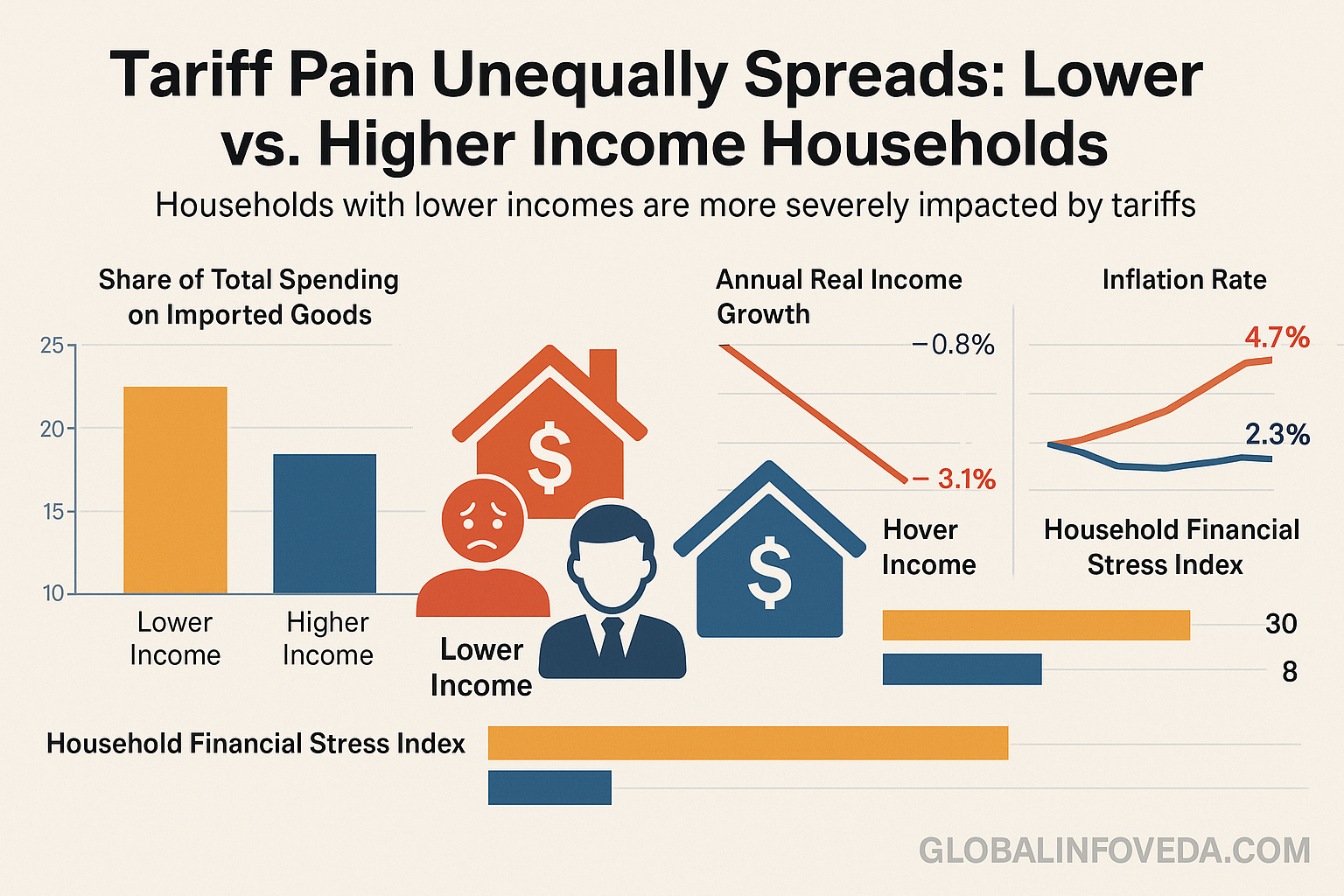
Income Inequality: By 2025, the tariffs were not just trade‑room abstractions but checkout totals, delivery fees and the monthly squeeze on working families. The plain fact is that the same headline tariff hike hits lower income households and higher income households in a very different way. If you’re on the lowest rungs of the income ladder, every percentage point sucked up by imported basics is money drained from rent security, health co‑pays and school lunches. For wealthier families, the shock is real but gets absorbed through discretionary trims or portfolio rebalancing. This guide breaks down the causes, not the slogans — how tariffs ripple through supply chains; which types of households take the hardest hit; and what practical steps can put purchasing power back in pockets as policymakers squabble over relief.
Meta description: In 2025, tariffs bite unevenly—why lower income households pay more, how costs pass through prices, and what families can do to defend purchasing power.
🧭 What changed in the 2025 tariff landscape
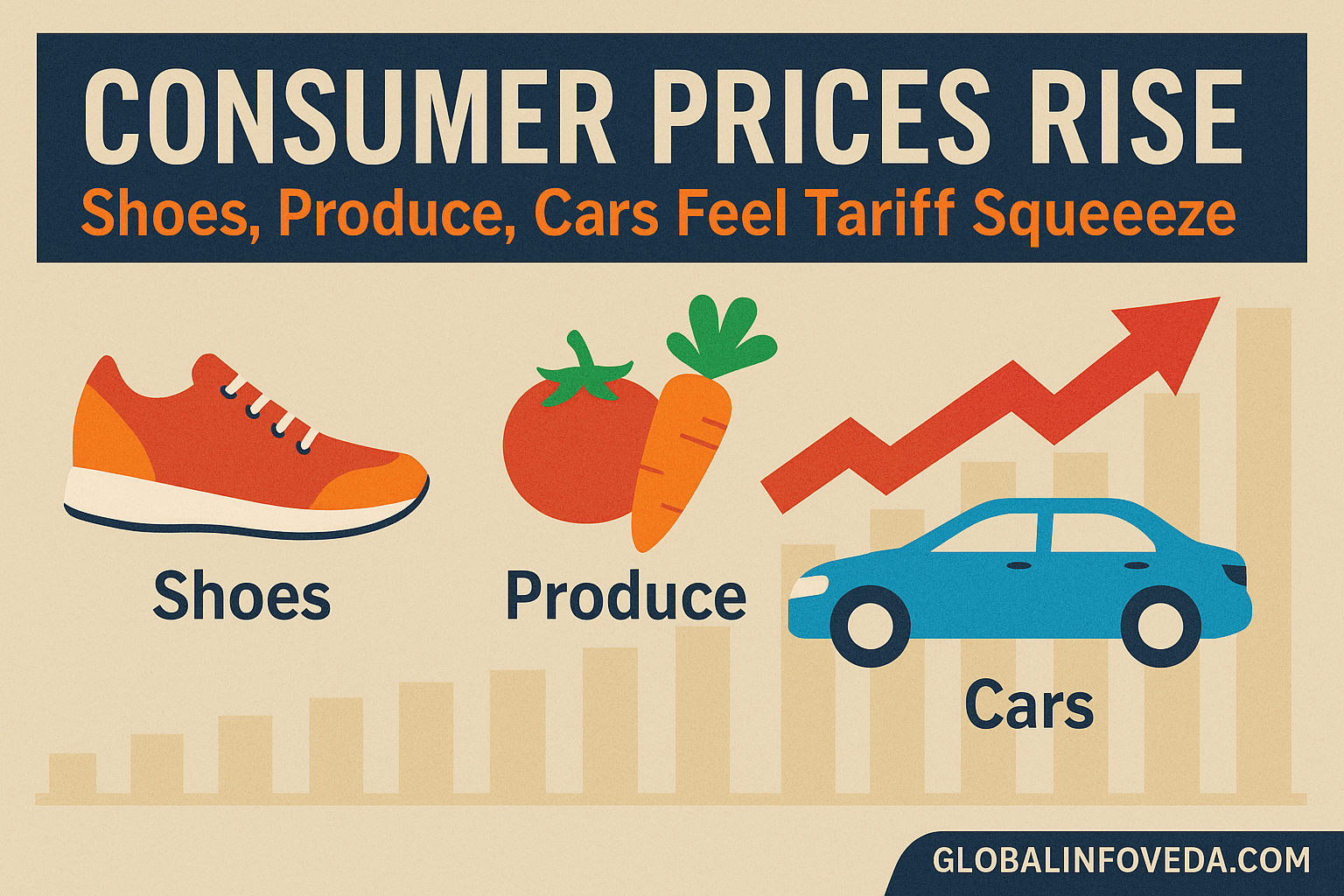
What this meant was a triple tier of squeeze in 2025: higher import duties at port, reborn logistics surcharges and retail margin protection following a tumultuous 2024 — as tariffs spiked in 2025 — amid sticky services inflation and re‑pricing of global freight. For lower income households the timing was brutal: The pandemic buffers are gone, the savings are thin and wage gains softened. Trade-exposed essentials have been a necessity not just for low-income but also for high-income households, who faced the same shelf labels, and maybe somewhat more substitutable or deferrable consumption; by value, their share is smaller. Meanwhile, smaller retailers negotiated shorter contracts and passed through increases more swiftly, narrowing the window to arbitrage deals. The result was not just more expensive electronics and appliances but also more subtle creep in clothing basics, auto parts and packaged food products —anything with imports in the supply chain. Consumers didn’t have to read policy memos; they could feel it in the cart.
For a broader macro lens, see: Tariffs Add Tilt Toward “Stagflation‑Lite” in the U.S. Economy
🧮 How tariffs transmit into household budgets
- 🔗 Direct duty pass‑through: importers add statutory tariffs to landed cost; retailers price to margins; shoppers meet the final number.
- 🧳 Component cost ripple: phones, appliances, cars, even shoes assemble global parts; a duty on one input lifts the entire bill.
- 🚛 Freight amplification: port delays and re‑routing raise per‑unit transport; perishables and temperature‑controlled goods climb first.
- 🧾 Service echo: installation, repairs, and platform fees move with goods prices; households pay more even outside the grocery aisle.
- 🏦 Financing drag: when items cost more, card balances linger; interest expense becomes a hidden tariff on the poor.
🥣 Why lower income households carry a heavier load
There is nothing proportional to a 10 percent increase on a school shoe across incomes. The proportion of their income that lower‑income families are spending on trade‑exposed essentials — food that contains imported oils, hygiene and baby products, phones that are a school‑and‑work necessity, low‑end two‑wheelers or used cars with imported components — is higher. They also shop more often in small baskets, offering fewer bulk discounts, and experience more retail rounding. Their time is crucially money: Multiple jobs and long commutes limit the ability to chase sales from store to store. When prices spike, they can’t as easily postpone or swap out for other items: The phone upgrade comes when the screen cracks, not just when there’s a holiday sale. Upmarket, high income households re‑sequence purchases, shift to domestic premium brands, and sometimes rely on portfolio gains to make up for the shock. The tariff could be identical; the margin for error is not.
📊 🧺 Everyday basket impact across income tiers
| 🛒 Basket type | 💵 Share of income spent on goods | 🎯 Exposure to tariff‑sensitive items |
|---|---|---|
| Lower income households | High (40–60%) | High: staples, baby care, entry phones, auto spares |
| Middle income households | Moderate (25–40%) | Medium: mid‑range electronics, apparel, packaged foods |
| Higher income households | Lower (15–25%) | Lower: discretionary imports, luxury substitutions |
Household stress background: U.S. Families Could Pay $3,800 More a Year Due to Tariffs
🧠 Elasticity, substitution, and the real choices on the ground
- 🟢 High elasticity goods: gadgets, fashion extras, dine‑out; postponable for most, especially higher income households.
- 🟡 Medium elasticity goods: mid‑tier appliances, branded cereals; swaps to domestic alternatives or private labels.
- 🔴 Low elasticity essentials: baby formula, school footwear, cooking oils; lower income households reduce quantity or quality rather than delay.
- 🧃 Shrinkflation trap: same price, smaller pack; families re‑buy sooner, raising effective inflation.
- 🧺 Durable deferral: deferring refrigerator or tire replacement invites failure costs; poorer families pay twice when breakdowns hit.
🧾 The paycheck math: three family archetypes in 2025
- 🧑🔧 Household A (lower income, hourly): Two adults, retail and warehouse shifts. Rent and utilities fixed at 55% of take‑home. After tariff‑linked increases on food and transport, the monthly buffer shrinks to 2–3%; one illness or car repair triggers debt.
- 🧑🏫 Household B (middle income, salaried): Teacher + admin professional. Buffer at 10–12%. They postpone appliance upgrades, switch to store brands, and keep vacations local; impact is felt but managed.
- 👩⚖️ Household C (higher income, salaried + equity): Tech manager + consultant. Buffer 25–30%. They time purchases to seasonal sales, pivot to domestic premium brands, and hedge exposure by adjusting investments.
🧪 Case study — the essential worker duo
A hospital attendant and a delivery driver, and two children Two children, a hospital attendant and a delivery driver all share a two‑bedroom. Their family plan is not up for discussion, Dumas said, since school notifications and shift changes come in over apps. When Ms. Shastri’s tariffs drove up the costs of entry‑level phones and spare parts, the family took out loans to buy a reconditioned handset charging a higher interest rate. At the same time, the cost of cooking oil and diapers rose, and a puncture in a scooter tyre required a new tube that went up in price after import duties on rubber parts. Their solution was not austerity; it was system design: Making the switch to store‑brand beans and rice, coordinating $5 dinners and forming a neighborhood rotation for bulk staples. They stayed out of shrinkflation traps by documenting unit prices and the date in a shared note. Twelve weeks later, this income was able to maintain a slim emergency fund — a small victory, but a real one.
🧑🏭 How small businesses pass costs into wages and hours
When retail and services SMEs grapple with input price hikes driven by tariffs, they juggle three levers: raise prices, trim hours, or delay replacements. For entry‑level employees, the fastest impact is not a headline layoff; it’s less work and slower overtime approvals. Fewer hours mean less income just as the costs of living rise, expanding the divide for low-income families. Bigger employers hedge themselves with procurement scale and inventory hedges; smaller ones are left to haggle renegotiations and cheaper credit. An uneven employer landscape yields uneven household outcomes — and it’s most apparent in service corridors in which wages follow footfall.
📊 🧰 Employer responses and worker impact
| 🏢 Employer move | 💸 Cost to employer | 👷 Worker impact |
|---|---|---|
| Raise prices | Low‑medium | Hours steady, real wages fall as prices rise |
| Trim hours | Low | Immediate income loss for hourly staff |
| Delay capex | Medium | Equipment failures create unpredictable shift volatility |
For the labor‑market macro view: U.S. Services Sector Nears Standstill Amid Tariff Pressure
🧠 Why financing magnifies the inequality effect
Credit is not neutral. High income homes are buying 2-3 EMIs and paying cards in full. The 1 Lower income households are discriminated against with subprime APRs, late fees, no offer access to zero‑cost offers. When tariffs push appliance or auto‑part prices up, the financing tail adds months of interest to the bill, and a 10% price bump turns into a 20–30% total burden over the payoff horizon. The result is a“interest tax” that is regressive and that compounds the tariff shock. Policy relief that overlooks this channel will miss where pain is actually creating additional pain.
🧠 Family structure: who hurts most and why
- 👶 Single‑parent homes: fewer adult earners, higher childcare constraints; cannot chase price arbitrage; high exposure to baby necessities.
- 🧓 Multigenerational units: more mouths but also shared cooking and bulk buying; can outperform peers if coordination is strong.
- 🧑🦽 Households with disability: medical equipment and specialized diets magnify import exposure; delivery fees stack up.
- 🧑🎓 Student‑heavy homes: device and data dependence is non‑negotiable; broken phone screens become financial emergencies.
🧭 Regional price maps and commute realities
Port‑adjacent metros respond quickly to duty changes but sometimes experience rapid discount cycles as inventory is cleared. Interior town are much slower to pass‑through price weakening but have fewer alternatives. Commute screams were long‑commute areas; food deserts meant more reliance on convenience stores where unit prices are higher. Lower-earning households with inflexible commuting pay at the pump and in the store. Remote‑work flex as a perk for higher income earners who can time shops and travel off‑peak, taking advantage of the deals that the rest can’t access.
🧪 Case study — the middle‑income pivot
A public‑school teacher and an office manager, both on salary bands with a limited upside in bonus, went from brand loyalty to spec loyalty: they drow up the five things that really mattered in a phone (battery, camera, storage, durability grade, rate of OS updates) and bought the best domestic model made to the appropriate spec when that model hit a festival discount. They maintained a freezer inventory of cooked beans, adapted recipes to plant‑centric protein and transformed restaurant nights into potlucks with neighbors. The outcome: no debt ballooning to match creeping costs, a consistent savings rate and kids who hardly even noticed the swaps, because the food still tasted good, and the devices seemed to do the things that really mattered.
🧠 The behavioral traps during tariff spikes
- 🔄 Revenge buying when a sale appears, blowing the month’s buffer.
- 🧾 Subscription inertia: paying for underused apps or premium delivery tiers because canceling takes effort.
- 🛒 Brand anchoring: ignoring private labels that match quality for staples.
- 💳 Minimum payment mirage: carrying balances that convert sticker price shocks into compounding interest.
- 🕑 Time leakage: chasing micro‑deals across town; fuel and fatigue cancel savings.
🧰 Practical household playbook to defend purchasing power
- ✅ Build a price book: track unit prices for 30 staples; know your true deal baselines.
- 🧊 Freezer discipline: flat‑pack dal, beans, sauces; turn weekend effort into weeknight ease.
- 🪙 Sinking funds: set aside tiny weekly amounts for tires, phones, and appliances; shocks become scheduled.
- 🧺 Community bulk buys: coordinate with neighbors for oil, rice, diapers; split delivery and storage.
- 🧪 Menu repetition: rotate 10 winning meals; predictability lowers takeout temptation.
Hands‑on household tactics: Working Families Cut Costs—Skipping Meals, Choosing $5 Dinners
🧠 Modeling the impact: a simple method anyone can use
Households can try to guess how exposed they are to tariffs by segmenting their spend into three bins: trade‑heavy goods (electronics, auto parts, certain packaged foods), domestic services (haircuts, tutoring) and mixed baskets (apparel, appliances with local assembly). Assign a base import proportion to all of them and apply the announced duty change. Then, combine the effects of freight and financing (+2–5% typical) and the expected savings on substitution (−1–3% if you switch to store brands). The model is not perfect, but it does help predict which month will be tight. Repeat every quarter; the practice changes mind-sets from powerless to powerful, particularly for lower income families who feel like they have no options.
📊 🔄 Transmission channels and who feels them first
| 🔧 Channel | ⏱️ Timeline to hit households | 👥 Most exposed tier |
|---|---|---|
| Port duty → retail | 4–12 weeks | Lower income households (smaller carts, frequent shops) |
| Freight surcharge → perishables | 2–8 weeks | Mixed; higher in inland towns |
| Financing cost → durable buys | Immediate if on credit | Lower income households via high APRs |
Macro transmission context: Global Realignment: Tariff Wars Fuel Decoupling of Financial Systems
🧠 Health, nutrition, and dignity under price stress
Hunger is not just about calories; it is about predictability. Households with smaller incomes and higher tariff‑driven grocery bills too often substitute quality with quantity, but it backfires when children crash mid‑afternoon. The cure is basic plates that defend protein and fiber: If there’s dal + rice + greens; if there’s eggs + slaw + rotis; if there’s chana + lemon + jeera rice, you’re in good hands. Read More Ultra visible abundance (large bowls, bright slaws) seems only to quiet the room, early and often. By naming one celebration ritual — Friday movie, shared dessert, family walk — they are protecting the morale that will help the plan last. Wealthier households may not experience hunger, but they do experience status anxiety; recasting thrift as intelligent consumption wards off self‑defeating splurges.
🧑⚖️ Policy levers that target the pain points
- 🛡️ Targeted credits for households under a set income, redeemable on staples, reducing administrative friction.
- 🧾 Unit‑price transparency mandates, blocking shrinkflation ambiguity and helping shoppers compare true value.
- 🧺 Bulk‑buy co‑ops supported by municipalities; shared storage lowers per‑kg costs for the poor.
- 🚍 Transport vouchers for job‑critical commutes to stop the pump from stealing the pantry.
- 💳 APR caps on essential durable financing; slash the “interest tax” that magnifies tariff pain.
🧪 Case study — the affluent household’s quiet adjustments
A family of senior managers with mortgage and investments saw prices go up on imported wine, electronic devices and travel gear. They have done that by suspending non-essential upgrades, switching to local premium clothing and haggling a retention discount on broadband and streaming bundles. Groceries switched to home brands for staples, but retained quality for coffee and cheese. They had also pre‑paid school fees to take advantage of small discounts and to avoid late fees. The net result: a decline in the monthly standard deviation of outflows even with higher prices — evidence that higher income households can insulate themselves through planning even when the basket headline looks roughly the same.
🧠 Cross‑border remittances and diaspora effects
Diaspora workers who send money home are caught in a double bind: Jobs hours soften when business slows, and exchange rates wobble as markets digest tariffs. Remittances fall at the same time that relatives back home are hit with more expensive imported fertilizers, cooking oil, and medicine. Household can improve flow stability by sending on regular dates, plan to remit fully to avoid surcharges, and group transfers within extended family to avoid paying multiple fees. The more predictable the flow, the stronger that budgets hold on both sides of the ocean.
🧰 Car ownership: when to repair, when to replace
Tariff‑sensitive parts (brake assemblies, electronics modules, tires) muddy car math. Lower-income households should weigh the total cost of deferred repairs against breakdown risk: Roadside tows, missed shifts and surge-priced rideshares can cost more than a timely fix. Community garages that bulk‑order common parts or who have exchange programs for refurbished components reduce exposure. For those with higher incomes, the decision between an EV or a hybrid will include choices based on the levying of import duties on batteries versus future fuel savings, timing — look for a shopping trip during dealer inventory resets.
🧠 Education and device strategy in tariff cycles
When the student (laptops and tablets) lie, (okay, some marketers, too) families can extend device life with battery and storage additions and keyboard covers and screen protectors. Schools and local libraries with tables of devices and repair benches are force multipliers. Common printers in apartment complexes eliminate costly ink snares. Bonus: Some structured offline time decreases data usage, while improving sleep and grades. The key is to keep schoolwork functioning without panic buys, a pipeline that tariffs often blow up without warning.
🧭 Household forecasting: three‑month horizon planning
Set a 90‑day plan with weekly anchors: staple rotation, one bulk‑buy window, one shared cooking session. Mark predictable shocks (school reopening, tire season, festival months) and pre‑save modest amounts. Keep a “repair before replace” rule with a checklist (clean filters, update software, check seals) that often delays expensive purchases. When households watch the quarter, tariff bumps look like navigable hills rather than cliffs.
❓ FAQs
- Are tariffs always inflationary? Not always and not forever, but in 2025 many duties landed on already‑tight supply chains, lifting prices in the near term.
- Why do poorer families feel it more? Higher exposure to essentials, smaller buffers, and worse financing terms magnify the same sticker shock.
- What can households do immediately? Track unit prices, repeat winning meals, coordinate bulk buys, cancel dormant subscriptions, and set tiny sinking funds.
- Do rich families escape impact entirely? No; they pay more too but cushion with timing, substitutions, and portfolio hedges.
📚 Sources
- U.S. Bureau of Labor Statistics (BLS) — Consumer Price Index and expenditure shares: https://www.bls.gov/
- U.S. Congressional Budget Office (CBO) — distributional impacts and macro assessments: https://www.cbo.gov/
- Bureau of Economic Analysis (BEA) — national income and product data: https://www.bea.gov/
- World Trade Organization (WTO) — tariff schedules and trade policy reviews: https://www.wto.org/
🌟 Final Insights
Tariffs are a blunt instrument with razor edges for low income households: they increase the floor cost of participating in modern life—phones, transportation, baby care—while high income households re‑optimize and glide. But it doesn’t have to be a tale of defeat. Families and individuals who engage in price tracking, freezer‑first cooking, bulk coordination, and even realistic financing can maintain purchasing power until incomes can keep up or policies can change. Community tools — shared storage, device libraries, co‑op bulk purchases — turn individual anxiety into collective hardiness. The families that win aren’t those that make for the most impressive hacks; it’s the ones with the most boring, repeatable systems.
👉 Explore more insights at GlobalInfoVeda.com