





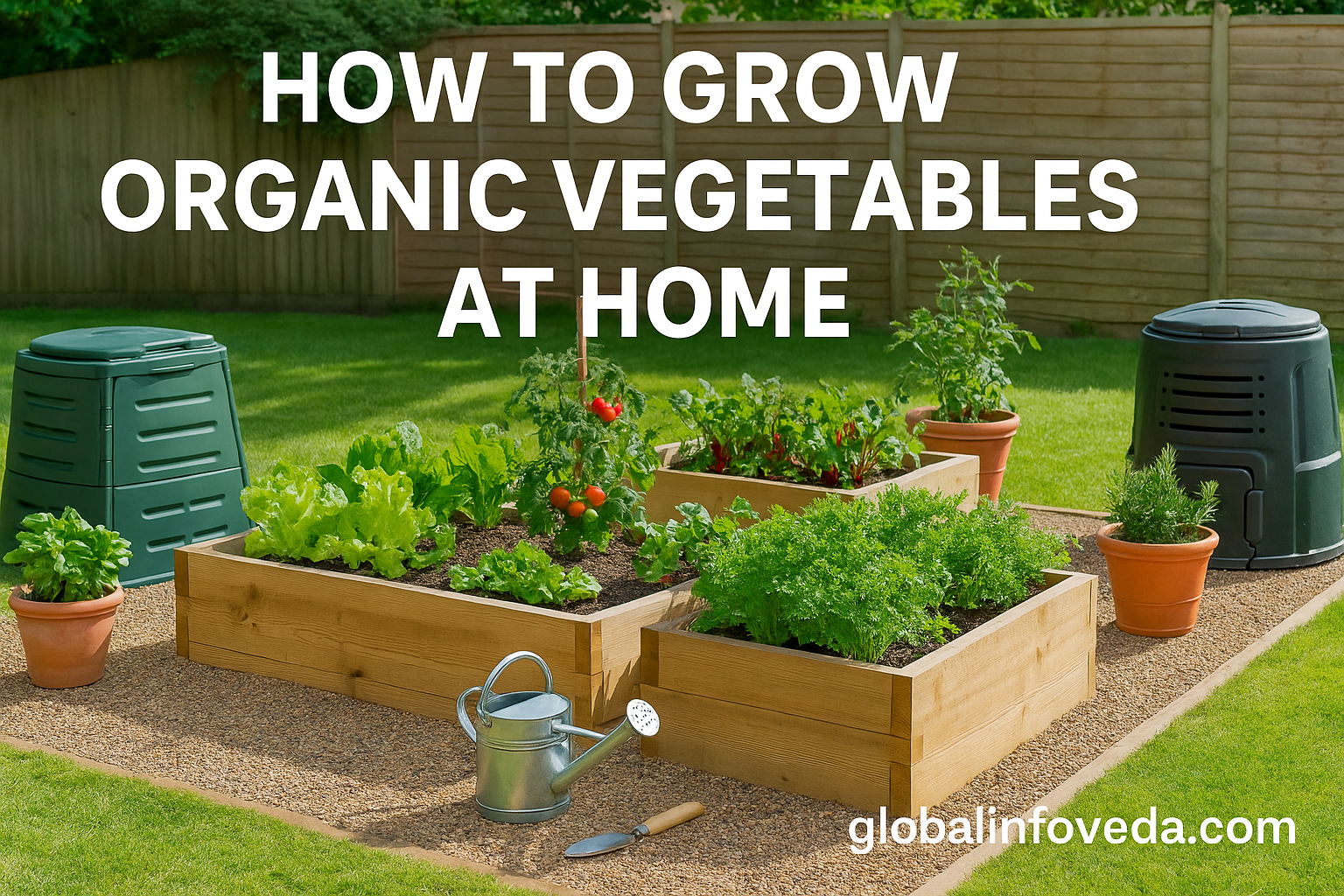
🌱 Introduction
For all that, however, successful home organic vegetable gardening is less about fancy gear and more about a couple of repeatable habits: match crops to your sunlight, build living soil, water the same way, feed with gentle compost‑based nutrients, and beat out problems with diversity and timing. This step-by-step guide teaches you how to establish a sustainable home garden on your balcony, deck, patio or in your backyard bed — without synthetic pesticides. You’ll discover how to evaluate your space, select the best containers and soil mixes, construct a seasonal plan, and practice integrated pest management (IPM) so your greens and veggies stay healthy. Two brief 3‑column snapshots, case studies, and an FAQ round it out so you can plant this weekend with confidence.
Meta description: Step‑by‑step 2025 guide to growing organic veggies at home — setup, soil, watering, feeding, IPM, seasonal plans, charts, FAQs, and pro tips.
🧭 What organic really means
When we say organic, we mean methods that focus on soil health, beneficial organisms and natural inputs. You will build fertility with compost, vermicompost and mulch; control pests by attracting predators and using botanical or biological products only when necessary; and steer clear of quick-hit salts that burn roots and microbes. The aim is not some pesticide “never ever” mantra; it’s an approach that keep your plants strong, so problems are rare and short‑lived. Healthy soil supports nutrient‑dense produce and retains water more efficiently, which means less work for you and less stress for your plants.
🗺️ Decide your goal and measure your space
- 🎯 Outcome: salad‑bar greens, stir‑fry veg, herbs, or a mixed kitchen garden? Picking a theme prevents impulse buys.
- 📐 Footprint: measure balcony/bed length × width; note railing height and safe load if using large planters.
- 🧭 Sun map: log hours of direct sun by morning, midday, late afternoon for three typical days.
- 🌬️ Wind: balconies get gusts; plan windbreaks (trellis fabric, dense herbs) to protect tender leaves.
- 🚿 Water access: is there a tap nearby? A watering can or drip will dictate container size.
- 🧽 Time budget: daily 5–10 minutes beats weekend marathons; plant to your routine.
☀️ Read your light and microclimates
Light is the gas pedal for yield. The leafy greens may shine with 3–4 hours direct sun + bright shade, but anything that’s going to fruit: tomato, chilli, cucumber, eggplant, likes to see 6–8+ hours. Walls reflect a lot of heat creating warm pockets; cool pockets are found under trees or on north‑facing aspects. Leave containers portable for seasonal moves: A winter home could sizzle in summer. If sunlight is lacking, adjust your strategy to a focus more on cut‑and‑come‑again greens, microgreens and herbs.
Biophilic design at home: simple ways to bring nature indoors
🧺 Containers, raised beds, or ground
- 🪴 Containers: ideal for balconies and renters. Choose food‑safe pots with drainage, 20–30 cm deep for greens, 30–45 cm for fruiting veg.
- 🧱 Raised beds: warm earlier, drain well, and protect soil. Size around 4×8 ft or smaller so you can reach everywhere.
- 🌿 In‑ground beds: cheapest long‑term; double‑dig once, then no‑till with mulches to protect structure.
- 🚰 Self‑watering planters: great for busy schedules; they buffer missed waterings.
- 🔁 Rotation & refresh: in containers, rotate crops and top‑up with compost each cycle to avoid tired mix.
🧫 Soil life is your engine
Imagine your mix as a breathing community. Good structure retains air and moisture in balance; decaying organic matter continues to feed microbes that steadily release nutrients. For containers, you want to go with a soilless mix that drains but holds water; for beds, you build loam with compost and mulch. Skip heavy garden soil in pots — it becomes compacted and smothers roots. Its texture should end up like a large handful of it clumps together when you squeeze it but crumbles when poked. Cover the top with straw, leaves or coco chips to keep the heat down and limit evaporation.
🧮 Soil recipes by setup
| Setup | Blend | Why it works |
|---|---|---|
| Containers | 40% coco coir/peat, 40% compost, 20% aeration (perlite/rice hulls) | Drains fast, holds moisture, feeds microbes |
| Raised beds | 50% native soil, 30% compost, 20% coarse sand/aeration | Builds structure, steady nutrients, good rooting |
| Microgreens | 70% coco/peat, 30% compost; 2–3 cm depth | Thin layer, quick cycles, easy sanitation |
🌱 Buy seeds wisely and start strong
- 🌿 Open‑pollinated and heirloom varieties let you save seed; hybrids can shine for disease resistance.
- 🧪 Certified organic seed avoids chemical treatments; check days‑to‑maturity and heat/cold tolerance.
- 🪴 Transplants: start tomatoes/peppers indoors; use clean trays, fine seed‑start mix, and good light.
- 🔁 Succession sowing: plant small batches every 2–3 weeks for steady harvests.
- 🧼 Sanitation: rinse trays, avoid damping‑off by watering from below and ventilating seedlings.
📅 Seasonal calendar and crop families
Your calendar unfolds in temperature bands: cool‑season (lettuce, spinach, peas, radish) when the nights are mild; warm‑season (tomato, okra, cucumber, basil) when the nights stay warm. Organize plants in groups by crop family (brassicas, solanums, cucurbits, legumes) to rotate and interrupt pest cycles. If summers are intense, swap in heat-resistant malabar spinach, amaranth, yard‑long beans, okra and cherry tomatoes; add leafy mixes and roots in cool months. Maintain a rudimentary diary: date, variety, weather, result.
Chaos gardening & companion planting—indoor and community greenscaping
💧 Watering that plants love
- 💦 Finger test: water when the top 2–3 cm is dry; avoid daily sprinkles that keep roots shallow.
- 🫗 Deep soak: aim for slow, even watering until a bit drains from the bottom of containers.
- 🌤️ Time of day: early morning reduces disease; evening works in heat waves if leaves dry before night.
- 🪣 Mulch: a 2–5 cm layer cuts evaporation and cushions summer heat.
- 🧪 Quality: if tap water is very hard/chlorinated, let it stand before use or mix in rainwater when possible.
- 🧵 Drip/olla: simple drip lines or clay ollas stabilize moisture with minimal effort.
🍽️ Feeding the soil, not just plants
When you feed the soil web, plants prosper. Work finished compost into new containers and beds and top‑dress with a light layer every 4–6 weeks during active growth. Brew a light compost tea, or use vermi‑extract — a bit of enclosed vermicompost — to inoculate microbes. Slow organic fertilizers (seaweed, fish hydrolysate, rock phosphate, wood ash in moderation, for example) fill in the spaces left by the plant symptoms. As with organics, overfeeding can salt up containers — use light, frequent doses.
Superfoods that boost immunity and energy
🐞 Prevent pests and disease with IPM
- 🧭 Scout weekly: flip leaves, check stems; early aphids and mites are easiest to stop.
- 🦋 Attract allies: plant dill, fennel, marigold, alyssum to pull in ladybirds and hoverflies.
- 🚿 First response: water blast small aphid clusters; prune infected leaves.
- 🧴 Soft controls: neem, horticultural soap, or BT for caterpillars—apply at dusk, follow labels.
- 🧱 Barriers: row covers for brassicas; copper tape around planters for slugs.
- 🔁 Rotation & spacing: don’t replant the same family in the same pot back‑to‑back; give leaves room to breathe.
🪜 Trellising and vertical support
Vines and tall plants yield best with support. String cucumbers, beans, peas up plain twine trellis; stake tomatoes with T‑posts or cages; tie loosely with soft plant ties so stems can thicken up. Growing up, instead of out, conserves floor space and helps promote air circulation around plants, reducing the risk of disease that can result from spatter during watering or rainstorms. If it is windy, anchor the base and pinch side shots to reduce the sail effect.
🧑🍳 Grow by taste and nutrition
Think in recipes. A salad box might include leaf lettuce, rocket, basil and cherry tomatoes; a curry bed, tomatoes, okra, green chillies, coriander and spinach. Roots like carrot and radish like loose soil; combine them with leafy tops to maximize surface space. Diversity reduces pest pressure and keeps your harvests fresh and varied. Gather in the morning and it will be crisp; it will cool in a short time, and may be stored dry.
Plant‑based diets: balancing tradition and global health trends
🧭 Light bands and crop fits
| Light band | Good choices | Notes |
|---|---|---|
| 3–4 hrs sun | lettuce, spinach, mint, microgreens | Prioritize leafy crops, frequent harvests |
| 5–6 hrs sun | beetroot, carrot, beans, coriander | Roots form; beans set pods in warm spells |
| 6–8+ hrs sun | tomato, cucumber, pepper, eggplant | Fruiting crops need heat and steady water |
🧰 Harvest timing and handling
- ✂️ Leafy greens: cut outer leaves; leave the crown to regrow.
- 🧺 Herbs: snip above a node to encourage bushiness.
- 🍅 Tomatoes: pick at full color with a gentle twist; ripen indoors if rains threaten.
- 🥒 Cucumbers: harvest slightly immature for crunch; overripes turn bitter.
- 🫛 Beans/peas: frequent picking keeps vines productive.
- 🧯 Post‑harvest: keep mud off leaves, rinse, spin or pat dry, refrigerate crisp.
🚫 Common mistakes (and easy fixes)
- ❌ Overwatering: yellowing leaves and fungus gnats—switch to deep, infrequent watering and add aeration to the mix.
- ❌ Too much fertilizer: leaf tip burn—flush pots with water and slow down; rely on compost.
- ❌ Crowding: poor airflow—prune, trellis, and space correctly.
- ❌ Reusing tired mix without refresh—add compost and a pinch of organic fertilizer each cycle.
- ❌ Ignoring sun: planting fruiting veg in 3–4 hrs of light—switch to greens/herbs there.
🧪 Two mini case studies
Balcony duo: Two 40 cm planters grow salad mix, basil, and cherry tomato. A cheap drip line plus morning checks kept moisture steady; a weekly compost top‑dress maintained vigor. By week 8 they were harvesting bowls twice a week.
Backyard bed: A 1×3 m raised bed with cucumber on trellis, bush beans, and leafy greens underplanted. A simple row cover blocked moths; neem at dusk handled early aphids. Mulch cut water use by 30%.
Gut health revolution: why fermented foods dominate 2025 diets
🛠️ One‑month starter plan
- 🗓️ Week 1 — 🌞 Sun map, choose containers/bed, buy seeds/transplants, mix potting blend.
- 🧰 Week 2 — 🪴 Plant salad greens and herbs; install simple drip or schedule hand‑watering.
- 🛡️ Week 3 — 🐞 Add ally plants (marigold, dill); set up trellis; begin succession sowing.
- 📊 Week 4 — 🧾 Review: what grew fastest, which spots struggled; adjust varieties and watering.
🧠 FAQ
- What are the easiest organic vegetables for beginners? Lettuce, spinach, radish, basil, mint, bush beans.
- How do I know my compost is ready? It smells earthy, looks dark/crumbly, and you can’t identify original scraps.
- Can I reuse potting mix? Yes—remove roots, mix in fresh compost, add perlite for air, and rotate crop families.
- Are coffee grounds good fertilizer? In moderation—best composted first; straight grounds can compact.
- What is the best natural pest spray? Start with water jets and hand removal; use soap/neem/BT only if needed and at dusk.
- Do I need to test soil? For beds, a simple pH/EC check helps; in containers, adjust by observing growth.
♻️ DIY compost and vermicompost
Having plenty of compost is the cornerstone of an organic home garden. For yard piles, a 1×1×1m (roughly) aerated pile combines greens (kitchen scraps, coffee grounds and fresh prunings) with browns (dry leaves, shredded cardboard) in approximate 1:2 proportions by volume. Keep it as moist as a wrung‑out sponge, turning every 7–10 days to add air. In apartments, a vermicompost bin is both cleaner and faster: a lidded box with ventilation holes in its sides, filled with bedding made from coconut coir or shredded paper (moistened but not wet), that you stock with red wigglers and add small, chopped bits of waste, such as chopped stems and stalks. Steer clear of oily or spicy foods, and bury feedings to keep fruit flies at bay. Good, finished compost will smell earthy, clump only lightly and be studded with white fungal threads — just the type of food your soil web adores. Top‑dress pots once a month with 1–2cm and scratch in lightly to keep up microbial activity.
🧪 Nutrient deficiency signals you can read
Plants telegraph trouble way before they crash. Nitrogen deficiencies manifest as pale green and slow growth overall; remedy with a mild application of vermi‑extract or diluted fish/seaweed. Phosphorus shortage causes purple hue on old leaves and feeble roots; add bone lunch or improved compost prior to at transplanting time. Issues with potassium curl leaf edges and detract from fruit quality; a sprinkling of wood ash (sparingly, and never near young roots) or kelp helps. Bremner: Calcium deficiency causes blossom end rot in tomatoes and peppers — it’s not a disease; correct it by keeping moisture consistent and adding crushed eggshell or gypsum during bed prep. Yellowing between the green veins indicates iron/magnesium problems; continue to monitor pH and foliar drench with chelated micros. Always correct watering first — many “deficiencies” are caused by overwatering and low oxygen at the roots.
💧 Irrigation patterns that save time
- 🕒 Deep, infrequent cycles train roots to chase moisture; aim for a full soak and then wait for the top 2–3 cm to dry.
- 💡 Pulse watering: two short passes a few minutes apart reduce runoff in lightweight mixes.
- 🧵 Drip lines or soaker hoses keep foliage dry, lowering mildew risk on cucurbits and tomatoes.
- 🪣 Ollas (buried clay pots) smooth hot‑day spikes in containers and small beds.
- 🌥️ Morning watering reduces leaf wetness overnight; in heat waves, a late afternoon top‑up is fine if leaves dry before dusk.
- 📓 Moisture logs: jot down intervals that keep each pot happy; reuse as your watering calendar.
🌿 Companion planting for resilience
- 🌼 Marigold near tomatoes and beans adds aesthetic pop and attracts hoverflies that prey on aphids.
- 🧄 Garlic/chives around roses and leafy greens can confuse thrips and mites with their strong aroma.
- 🪴 Basil under tomatoes loves similar watering; partial shade from tomato vines protects its tender leaves.
- 🌱 Clover as a living mulch between rows feeds soil, suppresses weeds, and draws pollinators.
- 🫘 Legumes before heavy feeders like brassicas leave behind biologically fixed nitrogen for the next crop.
🧺 Harvest, wash, and store for maximum flavor
Consider harvest as a form of growing. Harvest in the cool of the morning when the leaves are turgid. Maintain a clean harvest bowl; don’t let mud come into contact with what you plan to eat. For leafy greens, dunk in cool water, swish gently, spin or pat dry, and store in breathable containers lined with cloth or paper. For herbs, give a light rinse and stand their stems in a jar of water in the same fashion as flowers; cover the bunch loosely with a bag. Tomatoes like to be kept at room temperature; put them in the fridge only once they are fully ripe and only if you want to stop them from ripening. Cucumbers will last longer — up to a week longer — if stored dry and cool (but not ice‑cold). Label your containers with the date and the variety, and you’ll kind of get to know which ones hold the best.
🧭 Year‑round planning — a simple rotation
- 🟢 Cool block (leaf/roots): lettuce, spinach, peas, radish, carrot.
- 🔴 Warm block (fruiting): tomato, pepper, okra, cucumber, eggplant.
- 🟡 Soil‑builder block: legumes (beans/peas), cover crops like buckwheat or clover.
- 🔁 Rotate each block forward one bed/container each new season to break pest and disease cycles.
- 🌾 Between main crops, sow a short cover (buckwheat in warm months, mustard in cool) then chop and drop for mulch.
🧰 Tool kit that pays for itself
- 🪴 Transplanter trowel with depth marks for accurate planting.
- 🧵 Soft ties and clips for trellises—reusable and gentle on stems.
- 🧯 Bypass pruners for clean cuts; a pocket sharpener keeps them effective.
- 📏 A simple soil probe (or wooden dowel) to feel moisture at depth.
- 📓 A garden log for dates, varieties, weather notes, and yield.
🧘 Mindset for steady success
Successful organic gardening is iterative. Learn, change one thing at a time, and prevention is always better than cures. Enjoy the small victories — that first bowl of home-grown salad, the trellis full of beans, the smell of basil picked two minutes before dinner. In one season, you’ll develop local intuition about sun, wind and watering that no generic calendar can match. Keep It Simple, Stupid, as the saying goes, and repetitions of what works — certain plants and techniques — will compound the gains year after year in that garden you call home.
📚 Sources
- Food and Agriculture Organization (FAO) — home gardening and agroecology basics: https://www.fao.org
- World Health Organization (WHO) — guidance related to pesticide safety and home exposure: https://www.who.int
- United States Department of Agriculture (USDA) — extension resources on soil health, composting, and IPM: https://www.usda.gov
- Royal Horticultural Society (RHS) — practical home‑growing advice and pest profiles: https://www.rhs.org.uk
🧠 Final insights
A successful organic home garden is a loop: note your sunlight, plant for the season, cover and feed the soil with compost, water deeply (though not too often) and respond to pests early with cultural and biological controls. You don’t need perfect circumstances — you just need small, consistent habits. Begin with greens and herbs, move on to trellised climbers as confidence builds, and take notes, so each cycle will be better. In a month’s time you will be eating from your home garden — and with a season you’ll know how to extend flavor, freshness and resilience by increasing scale.
👉 Explore more insights at GlobalInfoVeda.com